Illicit Alcohol in Nigeria: ₦428 Billion Loss Tests Regulatory Resolve
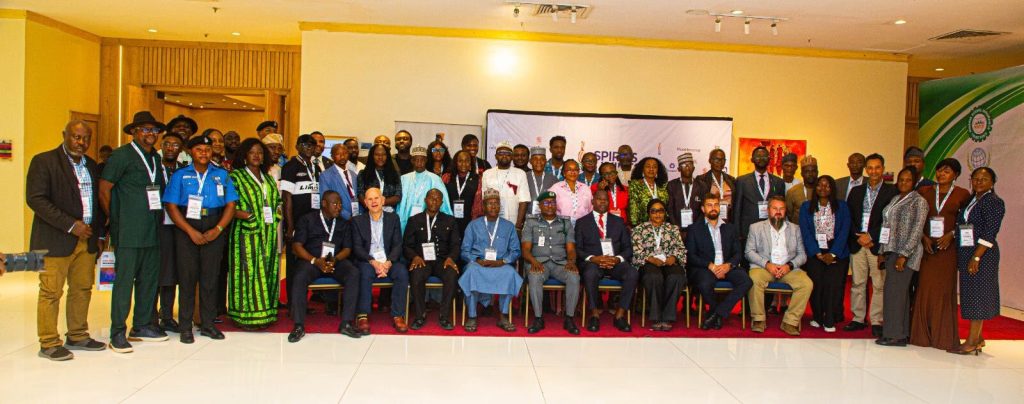
Illicit trade in spirits and wines has grown beyond the industry that first drew attention to it. That was the central argument when the Spirits and Wines Association of Nigeria (SWAN) brought regulators, policymakers and enforcement agencies together for a one-day workshop in April. The meeting was not intended to list industry losses but to make the case that the problem now demands a national response.
The scale is not in dispute. Tony Okwoju, SWAN’s Director-General, estimates that smuggling, counterfeiting, tax evasion and products moving outside regulatory channels cost the government ₦428 billion every year. He cited a 2024 Euromonitor survey showing that illicit products account for roughly 40 per cent of spirits and wines sold in Nigeria — two out of every five bottles. Each one represents excise duty, customs revenue and VAT that never reach government coffers, even as compliant manufacturers pay all three. Counterfeit products, though a smaller slice of the illicit market, carry the greatest danger because they are made entirely outside controlled manufacturing systems.
SWAN President Michael Ehindero framed the issue bluntly: “Illicit trade in spirits and wines is not just an industry issue; it has assumed a national concern.”
Enforcement Without Coordination
Nigeria lacks a single body to coordinate enforcement against illicit goods. NAFDAC, the Standards Organisation of Nigeria, Customs, the FCCPC, the Police, the EFCC and the revenue authorities each hold part of the mandate, but none holds all of it. A single consignment of counterfeit products might involve a forged trademark, an unregistered product, an evaded excise liability and a laundered payment. Investigated separately, that yields five partial cases; investigated jointly, it could yield one prosecutable network.
Operation OPSON, an international law enforcement initiative coordinated by INTERPOL and Europol to combat counterfeit and substandard food and beverages worldwide, shows how this can work. It brings police, customs, regulators and industry into a single framework. In its tenth round, 72 countries ran close to 68,000 checks, seized more than 15,000 tonnes of illicit product and opened over a thousand criminal cases. Alcoholic drinks were the most frequently counterfeited category.
The Transnational Alliance to Combat Illicit Trade (TRACIT), an independent, non-governmental, not-for-profit organization under US tax code 501(c)(6) focused on reducing the global harms of illicit trade, urges governments to appoint a national coordinator and a permanent inter-agency task force. Nigeria’s Customs Service has said much the same. What is missing is not willingness but a mandate. The Presidency should establish a standing inter-agency mechanism against illicit trade, with a national coordinator, a shared intelligence platform, joint operational targets and published reporting.
The Law Is Not Biting
Nigeria has no single anti-counterfeiting statute. Enforcement is spread across the Merchandise Marks Act, the Trade Malpractices Act, the Counterfeit and Fake Drugs Act, the Customs Service Act 2023 and the FCCPC Act 2018, each with its own agency and procedure.
The penalties are the deeper problem. The Merchandise Marks Act dates from the colonial era and has never been substantively amended. The Trade Malpractices Act sets a minimum fine of ₦50,000. The Counterfeit and Fake Drugs Act caps the fine for manufacturing or distributing counterfeit products at ₦500,000, though it also provides for five to fifteen years’ imprisonment. Against a ₦428 billion market, a half-million-naira ceiling is not a deterrent; it is an operating expense.
There is a clear need for the National Assembly to review the laws on counterfeiting, smuggling and adulteration, raising penalties to a level proportionate to the trade and closing the gaps between overlapping statutes.
The Fiscal Question
A third factor sits inside government. This is not an argument against excise duty; it is about calibration. Under measures effective 1 July 2026, spirits attract 30 per cent ad valorem plus ₦75 per litre, rising to ₦85 by 2028; wines attract 25 per cent plus ₦70; beer moves from ₦72 to ₦80, on top of currency depreciation and compressed purchasing power.
Where legal products move out of reach, demand migrates. Analysis from an earlier Nigerian excise review found spirits and wines here highly price-sensitive, with the low-price segment carrying most of the volume, and warned that a disproportionate price rise could push consumption into the illicit market. Unrecorded alcohol is estimated at around 63 per cent of consumption in Kenya and 50 per cent in Ghana.
An increase imposed without regard to affordability and enforcement capacity raises the rate while shrinking the base. Tax policy here is an enforcement variable, not merely a revenue instrument; future adjustments should be evidence-led, phased and assessed for their effect on illicit substitution before they are gazetted.
Levers That Industry Cannot Pull
An industry can secure its supply chain, authenticate its products and educate its consumers. It cannot legislate penalties, direct agencies of state to share intelligence, or set excise policy. Those levers belong to the National Assembly, the Presidency and the fiscal authorities. Two in every five bottles is the measure of how long they have gone unused.
Comments are closed.