How Soaring Petrol Prices Are Reshaping Everyday Life in Nigeria
When Funmilayo Obasa began driving in 2024, filling her car’s tank cost her 50,000 naira a month. At the time, petrol was selling for between 500 and 600 naira per litre. By 2026, the price had more than doubled, and so had her monthly fuel bill. Now she spends about 100,000 naira to fill the same tank, paying 1000 naira per litre or more.
The change has forced her to cut back on trips within her state and to scale down her social interactions. “There is this co-working space I used to go to, but I haven’t been going there a lot because of fuel,” she said. “I save the fuel now for essential runs like groceries and store runs, which I now go once every two weeks instead of once every week. I visit my parents now too, once every two weeks instead of every week.”
From Subsidy Removal to Sustained Price Increases
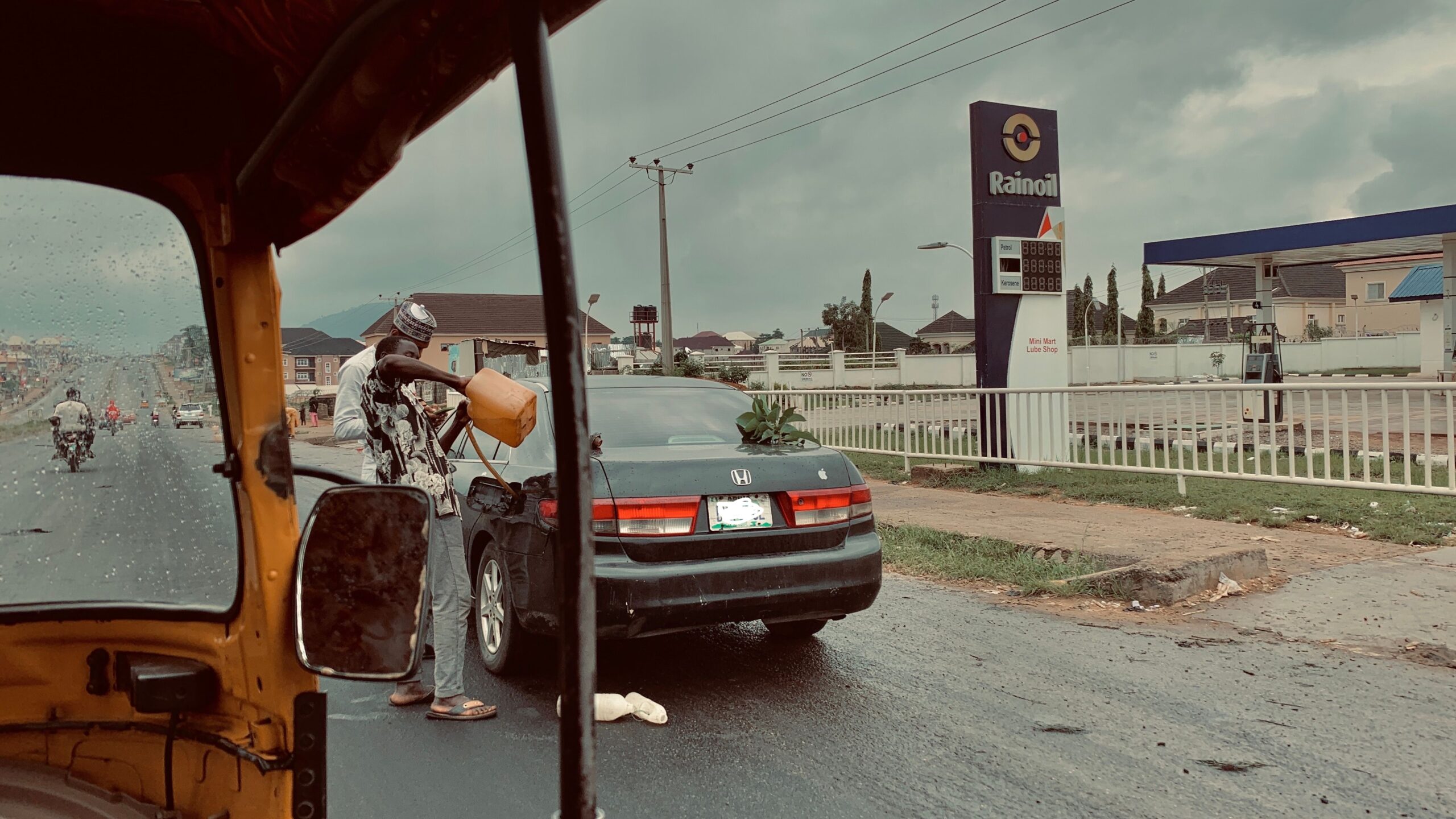
The upward trend in petrol prices can be traced to 2023, when President Bola Tinubu assumed office and announced the immediate removal of the fuel subsidy in his inaugural address. At that time, petrol was selling at an average of about ₦238 per litre across Nigeria, according to the National Bureau of Statistics (NBS).
Since then, prices have continued to climb, driven by the subsidy removal and fluctuations in global crude oil prices. More recently, the conflict in the Middle East and disruptions around the Strait of Hormuz, a critical route for global oil shipments, have pushed international oil prices higher, adding further pressure on domestic fuel prices.
By September 2026, petrol prices had reached between ₦1,400 and ₦1,500 per litre in parts of the country. Just days ago, one driver bought petrol for ₦1,470 per litre.
Changing Habits Behind the Wheel
For car owners like Funmilayo, the sharp increase has meant rethinking every journey. She no longer sticks to a single filling station out of habit. “Before now, I never used to pay attention to fuel prices as long as the filling station sells quality fuel,” she said. “But now, I drive further to search for a filling station that sells cheaper fuel.”
Salahudeen Abdulmajeed has taken a different approach. He has stopped driving to short-distance places altogether, opting for bikes instead. He now only drives to destinations where he would struggle to find available bikes for the return trip. He no longer drives for every journey.
For Nigerians like Funmilayo and Salahudeen, driving has become less about convenience and more about deciding which journeys are worth the cost. Trips to see family, work outside the home, or visit nearby places now require planning around the price of fuel.
Beyond the Filling Station
Switching to public transport or taking a bike may help reduce the cost of some journeys, but these alternatives come with expenses of their own. Meanwhile, the rise in petrol prices has contributed to the broader cost of living, including transportation fares and food products.
As fuel prices continue to affect how Nigerians move around, the effects go beyond what they spend at filling stations. For some, it means fewer visits to family and friends. For others, it means giving up the freedom to drive whenever they need to.
The cost of fuel is no longer just a line in the monthly budget. It is increasingly determining where people go, how often they leave home, and which parts of their everyday lives they can afford to keep. Driving used to be a leisure activity; not anymore.
Comments are closed.