Why Nigeria Is Running Two Budgets at Once: The 2025 Capital Budget Extension Explained
Nigeria is currently running two budgets at the same time. The 2026 budget is already in force, but the capital component of the 2025 budget remains alive until December 31, 2026. That means projects approved under the previous budget can still receive funding while the new budget is being implemented.
President Bola Tinubu signed the fourth extension of the 2025 capital budget into law on September 30, giving ministries, departments and agencies three more months to spend funds already appropriated for projects under the 2025 budget. The 2026 budget took effect on April 1, 2026, after Tinubu signed it into law, providing for ₦68.32 trillion in aggregate expenditure.
The situation explains why a project carrying a 2025 budget allocation can still be receiving attention in 2026, and why the government continues to talk about completing old projects while announcing new allocations under the 2026 budget.
Why Two Budgets Are Running at Once
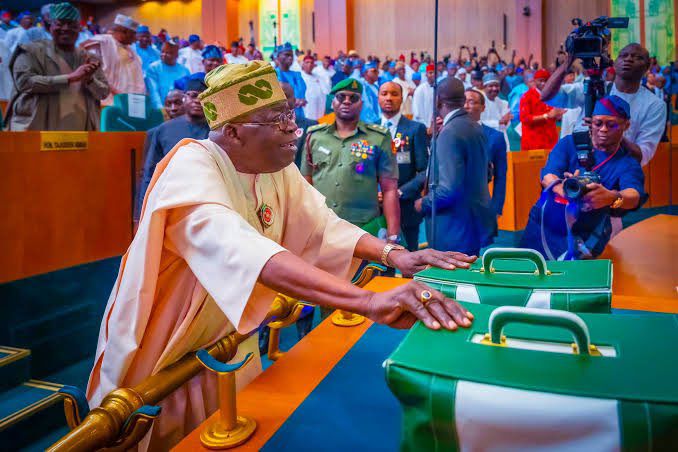
The 2025 capital budget was originally meant to end on December 31, 2025. Instead, it was extended first to March 31, then June 30, then September 30, and now December 31, 2026. That is four extensions for a budget that should ordinarily have expired at the end of 2025.
The extensions do not mean the government can create new projects under the old budget. The Senate said the latest extension was intended to allow projects that had already been funded to continue and be completed.
A budget is the government’s spending plan. It tells ministries and agencies how much they are authorised to spend and what that money is meant to achieve. When an older capital budget remains open while a new budget is already being implemented, government officials, contractors, auditors, lawmakers and citizens are dealing with two different sets of authorised spending at the same time.
Why Nigeria Keeps Extending Old Budgets
The government’s stated reason is simple: projects take time. If a road is already under construction, stopping funding simply because December 31 has arrived could leave the project unfinished. The government has argued that extending the implementation period gives ministries and agencies time to complete ongoing projects and ensures that money already appropriated is put to use.
But there is a practical problem behind the extensions. The Federal Ministry of Budget and Economic Planning said in December 2025 that 70% of the 2025 capital budget would be rolled over into the 2026 fiscal year. It instructed ministries, departments and agencies to focus on completing existing projects rather than introducing new capital projects. In other words, the federal government was already acknowledging that a large chunk of the capital spending approved for 2025 would not be completed within that year.
This is not entirely new. Nigeria has repeatedly carried capital spending from one budget year into another. On October 7, 2025, former Finance Minister Wale Edun told senators that the government intended to stop extending budget implementation beyond the fiscal year. At the time, the country was still dealing with the extension of the 2024 capital budget alongside the 2025 budget.
Then, in December 2025, Tinubu made an even more direct promise. While presenting the 2026 budget, he said Nigeria would stop running overlapping budgets and that all previous capital liabilities would be closed by March 31, 2026. From April 2026, he said, the country would operate on a single budget and revenue cycle. The 2025 capital budget has now been extended for the fourth time to December 2026.
What the Overlap Means for Citizens
Suppose the Federal Government appropriated money in 2025 to rehabilitate a federal road in your community. The project did not finish before the original deadline of December 2025. The government can now continue implementing that existing project with the 2025 appropriation because the capital budget has been extended. At the same time, the 2026 budget is already being implemented.
That means when you see government spending on the road in 2026, you cannot automatically assume the money came from the 2026 budget. It could still be money already allocated for it in 2025. This understanding is useful when citizens try to track whether the government actually did what it promised.
Budget monitoring can also become messy. If a ministry says it has spent money on a road, a school, or a hospital, a citizen trying to verify the claim needs to know which budget the money came from, when it was appropriated, how much was released, and how much has actually been spent. Without that information, an old project can look like a new achievement.
Risks to Fiscal Discipline and Transparency
Regardless of the government’s reason for the extensions, repeated extensions can create room for questions about how government spending is tracked. If a project approved in 2025 is still being funded in 2026, citizens need to know what was originally approved, how much was released, how much has been spent, and what has actually been delivered.
There is also the risk of old projects acquiring the appearance of new achievements. A road that appears in budget documents year after year may still be the same road, with the same allocation being carried forward. Without clear records showing what has changed from one budget year to another, it becomes harder to tell whether the government is completing projects or simply keeping them on the books.
After four extensions, the biggest concern is fiscal discipline. If budgets are meant to operate within defined fiscal years, repeatedly keeping old appropriations alive makes that discipline harder to enforce. It leaves citizens asking why projects could not be executed within the original timeframe, and what safeguards are in place to ensure that extensions do not become a convenient way of keeping spending open indefinitely.
What to Watch Going Forward
If there is a government project in your area that was already approved under the 2025 capital budget, the extension could mean the government has more time to finish it. If you are tracking a new 2026 project, you need to check whether it is actually new or an older project being carried forward.
For citizens trying to understand whether the government is keeping its promises, it may be necessary to look at more than the latest budget speech. The number in the budget is only the beginning. You also need to know whether the money was released, whether the ministry spent it, what the contractor has delivered, and whether the project is actually sitting somewhere in your community looking like the thing you were promised.
Nigeria’s latest extension does not make the 2025 budget disappear. It keeps its capital component alive until December 31, 2026, while the 2026 budget runs alongside it. For the government, that may be an administrative way to finish projects that were already funded. For citizens, it creates one more thing to check when following public spending: which year’s money paid for this project?
Comments are closed.