Hajiya Gambo Sawaba: The Fearless Fighter for Northern Nigerian Women’s Suffrage
Hajiya Gambo Sawaba is often remembered for the brutal details of her imprisonment: her head shaved with a broken bottle, repeated floggings, and multiple jail terms. But her legacy extends far beyond the suffering she endured at the hands of colonial and native authorities. She was a relentless advocate for women’s rights in Northern Nigeria, a political organiser who challenged tradition and power, and a key figure in the long struggle for female suffrage in the region.
Early Life and Personal Trials
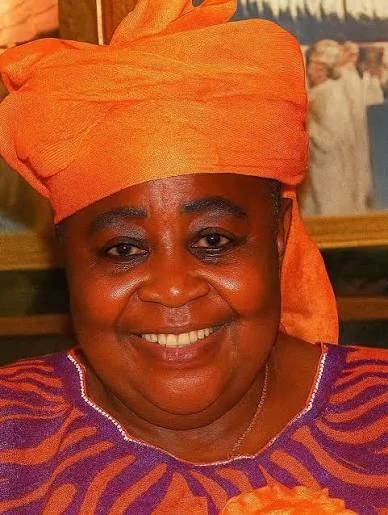
Born in 1933 in Niger State to a Ghanaian father and a Nupe mother, Sawaba was said to have come from a lineage of warriors. From a young age, she displayed a fighting spirit, often intervening on behalf of children who were losing fights, claiming to have bought their fight from them. Her primary education at the Native Authority Primary School in Tudun Wadaa ended prematurely after her father died in 1943 and her mother three years later. At 13, she was married off to Abubakar Garba Bello, a World War II veteran. He abandoned the marriage during her first pregnancy and was never seen again, leaving her to give birth to her only child at 16.
Political Awakening and NEPU
Sawaba’s activism took shape against the backdrop of Northern Nigeria under British indirect rule, where colonial policies were enforced through emirs and village leaders across 12 northern provinces, and the conservative Northern People’s Congress dominated the government. When she was 17, a shift occurred: Mallam Aminu Kano founded the Northern Elements Progressive Union (NEPU) in 1950, advocating for women’s education and equal social and economic rights. This philosophy was strongly opposed by the establishment, which claimed women were content and had not asked for more. But Sawaba found resonance in NEPU’s message. She joined the party’s women’s wing early, with Kano becoming her political mentor. Her resolve strengthened alongside the national feminist movement led by figures like Funmilayo Ransome-Kuti and Margaret Ekpo.
Clashes with Authority
Sawaba soon began grassroots door-to-door outreach to women living in purdah. Her efforts scandalised the Kano Native Authority, which brought her before the conservative Alkali court in 1952 on charges of inciting women to leave purdah. She was sentenced to three months in prison—the first of 16 incarcerations. Her arrests became so routine that she kept a blanket stamped ‘Prison Yard’ ready for the next police visit. Her in-laws resented her refusal to prioritise motherhood over political organising, leading to a peaceful split. As custom dictated, custody of her baby daughter went to her former husband’s family. By the end of 1952, Kano officials formally expelled her from the city, using local police to enforce her return to Zaria.
Exile and Continued Activism
Exile only fuelled her fight. She resumed political organising despite frequent prison sentences in Zaria, Kano, Kaduna, and Jos. In 1956, Sawaba and other women from the NEPU women’s wing staged a march to the Kaduna office of Sir Ahmadu Bello, Premier of the Northern Region, demanding women’s enfranchisement in future parliamentary contests. The premier offered a vague promise to evaluate the request, but no action followed. Progress elsewhere made the Northern refusal glaring: women in the South secured partial voting rights in 1951, with the Eastern and Western Regions formalising female suffrage in 1954 and 1959, respectively. Yet the Northern People’s Congress deflected demands in 1954 by asserting that women would receive the vote only in God’s time. Northern women were eventually granted the right to vote in 1976, a right concretised in the 1979 constitution. By then, Sawaba was already in Zaria, serving as a key leader of NEPU’s women’s wing.
The Name 'Gambo Sawaba'
Some records suggest that Sawaba was not her birth name but one given to her by Aminu Kano after she was appointed president of the women’s wing of NEPU. Another account traces the name to an event at Jakara Market in Zaria, where a political rally featured a male politician known as Alhaji Gambo Sawaba. After she addressed the rally, the Alhaji reportedly acknowledged her as the first woman to address a northern political rally and declared that she would henceforth be known as Gambo Sawabiyya, the feminine form of his name.
Comments are closed.