12 Halloween Movies for Your Watchlist: Horror Classics and Black-Led Favorites
Halloween viewing comes with its own rituals: the lights down low, a blanket within reach, and the familiar debate over which film to start with. This year’s strongest watchlist balances the stories everyone knows with the ones too often left off the list. Horror has always been a genre of cultural conversation, and Black filmmakers and performers have helped shape it, turning fear into commentary on race, history, identity, and belonging.
This guide pairs five horror classics with seven Black-led favorites. The first group delivers the shared language of the genre, from slashers to haunted hotels. The second shows how that language can carry sharper ideas, with ghost stories, vampire tales, psychological terror, and satire that stay with you long after the credits roll. Together, these films make a marathon suited to a quiet night in or a full spooky-season weekend.
Horror Classics Worth Revisiting
1. Halloween (1978)
John Carpenter’s influential slasher helped give the holiday its screen identity. Jamie Lee Curtis plays Laurie Strode, a babysitter stalked through the quiet streets of Haddonfield by the expressionless Michael Myers. Carpenter’s minimalist piano score does as much work as the camera, building tension through repetition, silence, and the threat of something just beyond the frame.
Watch it first if you want a tightly paced start to the night. At roughly an hour and a half, it establishes the right atmosphere without taking up the entire evening, leaving room for another feature.
2. The Exorcist (1973)
William Friedkin’s adaptation of William Peter Blatty’s novel remains one of cinema’s most unsettling supernatural horror films. Linda Blair, Ellen Burstyn, and Max von Sydow anchor a story about a young girl’s possession and the two priests who attempt to save her.
Save this one for later in the evening, when the lights are low and distractions are few. Its disturbing imagery and sustained intensity make it a demanding watch, so consider your group’s tolerance for graphic and psychologically unsettling scenes before pressing play.
3. The Shining (1980)
Stanley Kubrick transformed Stephen King’s novel into a chilling study of isolation, obsession, and a mind coming apart. Jack Nicholson and Shelley Duvall star as a caretaker and his wife at the vast, isolated Overlook Hotel, while Scatman Crothers plays Dick Hallorann, the hotel’s perceptive chef.
The film rewards careful viewing. Pay attention to the carpets, corridors, and striking symmetry of the interiors. Kubrick uses the hotel’s architecture to create unease long before anything overtly frightening happens, making the setting almost as important as the characters themselves.
4. Scream (1996)
Wes Craven’s self-aware slasher, written by Kevin Williamson, follows Neve Campbell’s Sidney Prescott as a masked killer terrorizes her small town. The film plays with horror conventions and the rules characters believe will keep them alive, all while delivering the suspense and sudden scares that made slashers a genre staple.
It’s an ideal middle-of-the-marathon pick: funny enough to lighten the mood, but clever and tense enough to keep everyone invested. Pair it with popcorn and friends who enjoy shouting theories at the screen.
5. Beetlejuice (1988)
Tim Burton’s eccentric comedy about the afterlife stars Michael Keaton as the chaotic ghost Beetlejuice, alongside Alec Baldwin, Geena Davis, and Winona Ryder. Its handmade effects, macabre humor, and eccentric visual style have made it a seasonal favorite for viewers who prefer their supernatural stories with a generous dose of absurdity.
If your group isn’t in the mood for gore, begin or end the marathon here. Its playful approach offers a welcome break from the heavier films on this list. You can also pair it with the 2024 sequel, Beetlejuice Beetlejuice, for a double feature.
Black-Led Favorites You Should Not Skip
6. Night of the Living Dead (1968)
George A. Romero’s low-budget landmark helped define the modern zombie film, while Duane Jones’s performance as Ben became a significant moment in horror casting. Shot in stark black and white, the film follows a group of strangers trapped in a farmhouse as the dead rise outside and their chances of survival grow increasingly uncertain.
Its bleak ending and social undertones continue to resonate, giving the film significance beyond its influence on zombie cinema. Watch it as both a gripping horror story and a piece of film history, particularly for the way Jones’s presence complicates the racial dynamics of the era in which it was made.
7. Candyman (1992)
Bernard Rose’s adaptation of a story by Clive Barker stars Tony Todd as the hook-handed figure of urban legend and Virginia Madsen as a graduate student investigating the myth. Set against the backdrop of Chicago’s Cabrini-Green housing development, the film explores racial violence, social inequality, and the way communities preserve—and are haunted by—their histories.
Todd gives Candyman an imposing presence, but the film’s power extends beyond its central figure. Its atmosphere and social commentary lend the supernatural horror a disturbing real-world dimension. Philip Glass’s haunting score is integral to the experience, adding an eerie, almost hypnotic quality to the film.
For a follow-up, Nia DaCosta’s 2021 Candyman, starring Yahya Abdul-Mateen II, revisits the legend through a contemporary lens and expands its exploration of art, memory, and racial violence.
8. Eve's Bayou (1997)
Kasi Lemmons’s directorial debut is a Southern Gothic drama set within a Louisiana Creole family. Jurnee Smollett plays a young girl whose memories of one summer begin to unravel long-buried family secrets. Samuel L. Jackson, Lynn Whitfield, and Debbi Morgan round out a luminous cast in a story shaped by memory, desire, betrayal, and the uncertain boundary between what is known and what is believed.
More haunting than frightening, Eve’s Bayou is an excellent choice for viewers who prefer atmosphere to jump scares. Its lush imagery and layered storytelling create a creeping sense of unease, allowing the family’s secrets to emerge gradually rather than relying on conventional horror shocks.
9. Get Out (2017)
Jordan Peele’s directorial debut follows Daniel Kaluuya’s Chris as he visits his girlfriend’s family and discovers something sinister beneath their seemingly welcoming manners. What begins as an uncomfortable weekend gradually becomes a nightmare, with the film using psychological suspense and sharp satire to expose the racial anxieties beneath its polite surface.
Get Out helped redefine contemporary horror and earned Peele the Academy Award for Best Original Screenplay. Its brilliance lies partly in how much changes on a second viewing: seemingly innocuous conversations and gestures take on new significance once you know where the story leads.
Place it toward the latter half of the marathon, when everyone is ready to pay attention to the details. It’s the kind of film that invites conversation long after the credits roll.
10. Us (2019)
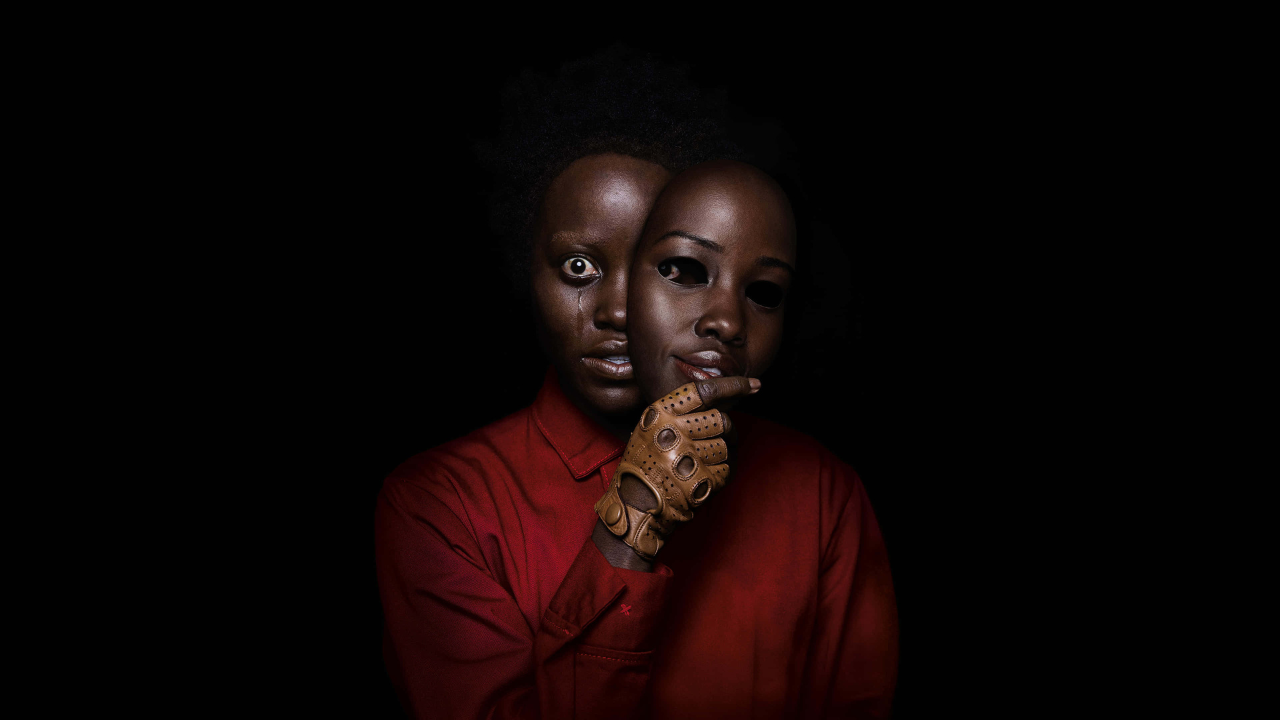
Peele’s second feature stars Lupita Nyong’o in a dual role as Adelaide Wilson and her sinister double, with Winston Duke playing her husband, Gabe. What begins as a family beach holiday descends into terror when mysterious intruders appear—figures who look exactly like the people they have come to torment.
Nyong’o’s performance is a major reason to watch, as she gives the film’s central duality both emotional depth and an unsettling physical presence. The visual motifs, recurring imagery, and references woven throughout the story also reward a second viewing. Beneath the surface terror lies a film that invites questions about identity, privilege, and the parts of ourselves we would rather not confront.
11. His House (2020)
Remi Weekes’s feature debut follows a refugee couple from South Sudan, played by Sope Dirisu and Wunmi Mosaku, as they attempt to build a new life in England. Their assigned home offers the promise of safety, but something sinister appears to be living within its walls.
The film uses the familiar haunted-house setup to explore displacement, grief, guilt, and the psychological cost of survival. Its supernatural elements are frightening in their own right, yet the deeper horror emerges from what the couple has endured and what they carry with them. It’s one of the most compelling recent entries on this list, distinguished by the way its ghost story and its exploration of the refugee experience are inseparable. Give it your full attention; its emotional weight is central to its impact.
12. Sinners (2025)
Ryan Coogler’s period horror film stars Michael B. Jordan as twin brothers who return to 1930s Mississippi to open a juke joint, only to discover that the night holds dangers beyond anything they anticipated. Blues music, Southern history, folklore, and vampire mythology come together in a story that uses supernatural horror to explore cultural inheritance, community, and the forces that threaten both.
Music is central to the film’s atmosphere and ideas, making the juke joint more than a setting. It becomes a gathering place for artistic expression, shared history, and collective identity, even as a darker presence threatens to disrupt the celebration.
As the most recent title on this list, Sinners offers a bold way to close the marathon. Watch it on the biggest screen available, with the sound turned up, and leave time afterward to discuss its layered themes and striking musical sequences.
How to Plan Your Halloween Movie Marathon
The best marathons build in a rhythm rather than stacking the most frightening films back-to-back. Start with something lighter, such as Beetlejuice or Scream, then move into the more intense selections as the evening progresses. Finish with a film that leaves room for conversation, such as Get Out or Sinners.
Check streaming availability before settling on your lineup, since films move between services and may require rental or purchase. It’s also worth considering your audience: several titles on this list address racial violence, trauma, and disturbing imagery, so choose the order with your group’s preferences in mind.
If you finish the list and want to keep the night going, Nope, Tales from the Hood, and Attack the Block are strong follow-up choices. Each brings a different perspective to the genre, from socially conscious science fiction horror to anthology storytelling and an alien invasion seen through the experiences of a South London community.
With a mix of familiar scares, inventive storytelling, and Black voices that have helped expand what horror can say, this lineup offers more than a night of frights. It makes room for the films that shaped the genre, the stories that challenge it, and the conversations that continue after the screen goes dark.
Comments are closed.