How AI Can Expand Opportunities for African Youth: What to Expect at Goalkeepers 2026 Dakar
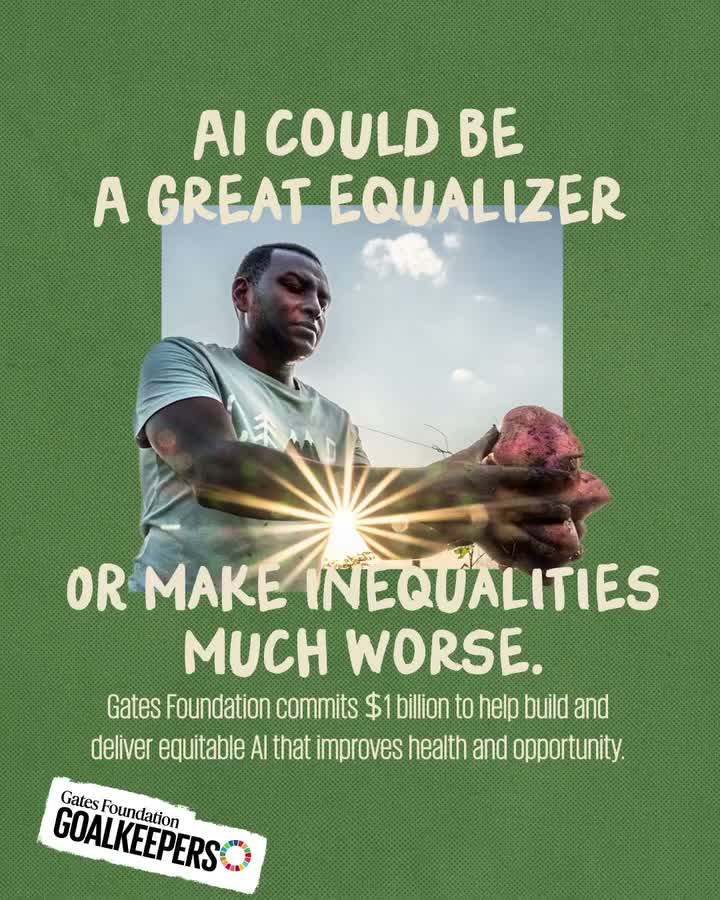
Artificial intelligence could serve as a powerful equaliser, but only if it is deliberately designed to benefit the people who need it most. That conviction runs through the conversations leading up to Goalkeepers 2026 in Dakar, where the focus will be on how AI can open doors for African youth.
A Glimpse of What Young African Innovators Are Already Building
During the 2026 ADF-YGL Convening in Lagos, young leaders from around the world, including Africa, gathered at Learn2Earn Academy, an AI talent factory founded by Iyinoluwa Aboyeji. There, the visiting leaders met students who have been using AI to build solutions for everyday challenges faced by Africans, particularly Nigerians.
One of those students, Anas Masama, presented ‘Morrow’, a fintech app that enables offline transfers without internet connectivity. Anas explained that although internet providers cover much of Nigeria, connection strength fluctuates or drops entirely, leaving Nigerians stranded at the point of payment. Using AI, he built ‘Morrow’ to address two problems: the embarrassment a Nigerian might feel because of poor internet connectivity, and the time lost as a result.
Anas’s invention illustrates the potential that emerges when Africans use AI to solve basic, practical problems.
Why Upskilling Is Urgent
Concerns about AI use in Africa are real, including hallucinations, stereotypical results and other risks. Yet AI remains one of the fastest-growing technological advancements in recent times. It continues to grow and become more efficient, and the most urgent task for Africans is to upskill in how to adopt AI for better use, so the continent does not get left behind.
Three Actions Bill Gates Calls For
In the 2026 Goalkeepers Report, Bill Gates calls for three actions now that will help AI improve lives and livelihoods for more people in the years ahead:
- Make AI tools work in every language people speak.
- Ground AI tools in local data.
- Invest in people and access in the places and populations they are intended to serve.
All three suggestions apply to Africa so it can properly leverage AI to expand opportunities.
At present, despite how expansive AI has become, it is built in places far away from Africa. This is why Africans, who have access to local data and speak African languages, should build AI tools that incorporate local data and African languages for better use. This way, AI has access to specific data of Africans and will allow it to better understand cultural contexts and pragmatics. This will make AI a great equaliser rather than make things less equal.
Of course, Africans still encounter basic challenges like electricity, connectivity, access to phones, and other issues, but those who have access must maximise it greatly to help others.
Goalkeepers 2026 Comes to Dakar
This year’s Goalkeepers is centred around this conversation. After hosting engaging and immersive events in the Nordics and New York, Goalkeepers is coming to Dakar on October 29. The event, “Equitable AI and the Future of African Youth”, aims to discuss how AI can create opportunities for Africans across various sectors while also addressing the challenges the continent faces.
Where AI Can Expand Opportunities for African Youth
Education
Access to quality education remains one of the core issues facing sub-Saharan Africa. With AI, African youth can gain access to quality education, regardless of where they live. Students can use AI-powered tutors to explain difficult subjects, practise questions, learn new languages and receive feedback based on their performance. Teachers can also use AI to prepare lesson plans and develop learning materials for students with different abilities.
Developed countries like the Netherlands use AI-powered platforms such as Snappet to analyse students’ work and provide exercises suited to their learning levels. UNESCO has also highlighted Rori, an AI tutor that reaches students in Sierra Leone and Ghana through WhatsApp. These examples show how African innovators can develop educational tools that work on mobile phones, use local languages and require less internet data.
For young Africans, this also creates opportunities to build educational technology companies, develop learning applications and provide digital tutoring services to students locally and abroad. Perhaps, instead of travelling thousands of miles to gain degrees from top universities in the world, AI can help bring education to doorsteps in Africa.
Finance and Investment
Financial literacy is one of the major conversations in the modern world. A while back, Fu’ad Lawal shared on X (formerly Twitter) that he asked ChatGPT to pick three stocks in June last year. He wrote in the tweet, “It recommended three companies he knew next to nothing about at the time. Today, they’re up over 200% cumulatively.” This is how AI can help people understand financial information and make more informed decisions.
African youth can develop financial tools that help people with irregular incomes manage their money, compare savings products and understand investment opportunities. AI can also help small businesses prepare financial records that make it easier to apply for loans.
Although AI cannot reliably predict every market movement or guarantee investment returns. Its recommendations can be inaccurate or biased, so users must verify information and consider their financial circumstances before investing.
Agriculture
Agriculture remains an important source of livelihood across Africa, but farmers face challenges such as unpredictable weather, pests, poor soil conditions and difficulties accessing markets. AI can help farmers make better decisions by analysing weather forecasts, satellite images, soil conditions and crop diseases.
Africans can create affordable farming applications that send weather alerts, identify crop diseases and connect farmers to buyers. Tools that work through SMS, WhatsApp or offline mobile applications could also help farmers who have limited internet access. These solutions can create opportunities for young people in agritech, agricultural research and food distribution. It even extends to the chain of food distribution.
Employment and Skills Development
Other areas of opportunity include employment and skills development. Today, anyone can get into tech and vibe code. Of course, they still need to be taught, but that beginner’s gap has been closed.
Challenges That Could Hold Progress Back
Despite these opportunities, the challenges of inaccurate information, bias, privacy concerns, and the possibility that automation could displace some jobs remain a significant concern. Also, limited electricity, expensive internet access and inadequate digital infrastructure may also prevent many African youths from benefiting.
This is why it is important for governments, educational institutions, businesses and technology companies to invest in digital infrastructure, affordable access and AI training.
A 2025 study projected that AI could contribute between 0.4 and 1.3 percentage points to annual labour productivity growth over the next decade in highly exposed economies such as the United States and the United Kingdom, depending on adoption and other assumptions. While these projections do not guarantee similar outcomes for Africa, they demonstrate why readiness and adoption matter, which is why Goalkeepers Dakar 2026 is momentous.
As AI continues to rapidly develop and expand, African youth cannot afford to be left behind.
Comments are closed.