Paramount Skydance Completes $111 Billion Warner Bros. Discovery Takeover, Reshaping Hollywood
Paramount Skydance has officially closed its $111 billion takeover of Warner Bros. Discovery, creating an entertainment giant that unites two century-old Hollywood studios, major broadcast networks, and global streaming platforms under one corporate roof. CEO David Ellison now leads a cultural footprint that spans film franchises, cable staples, and influential international newsrooms. The deal ends a year marked by intense bidding, regulatory review, and legal battles. Backed by private equity and sovereign capital, the newly consolidated company trades on the New York Stock Exchange under the ticker SKYD. Leadership must now integrate differing corporate cultures while managing more than $80 billion in inherited debt.
A New Big Four in Hollywood
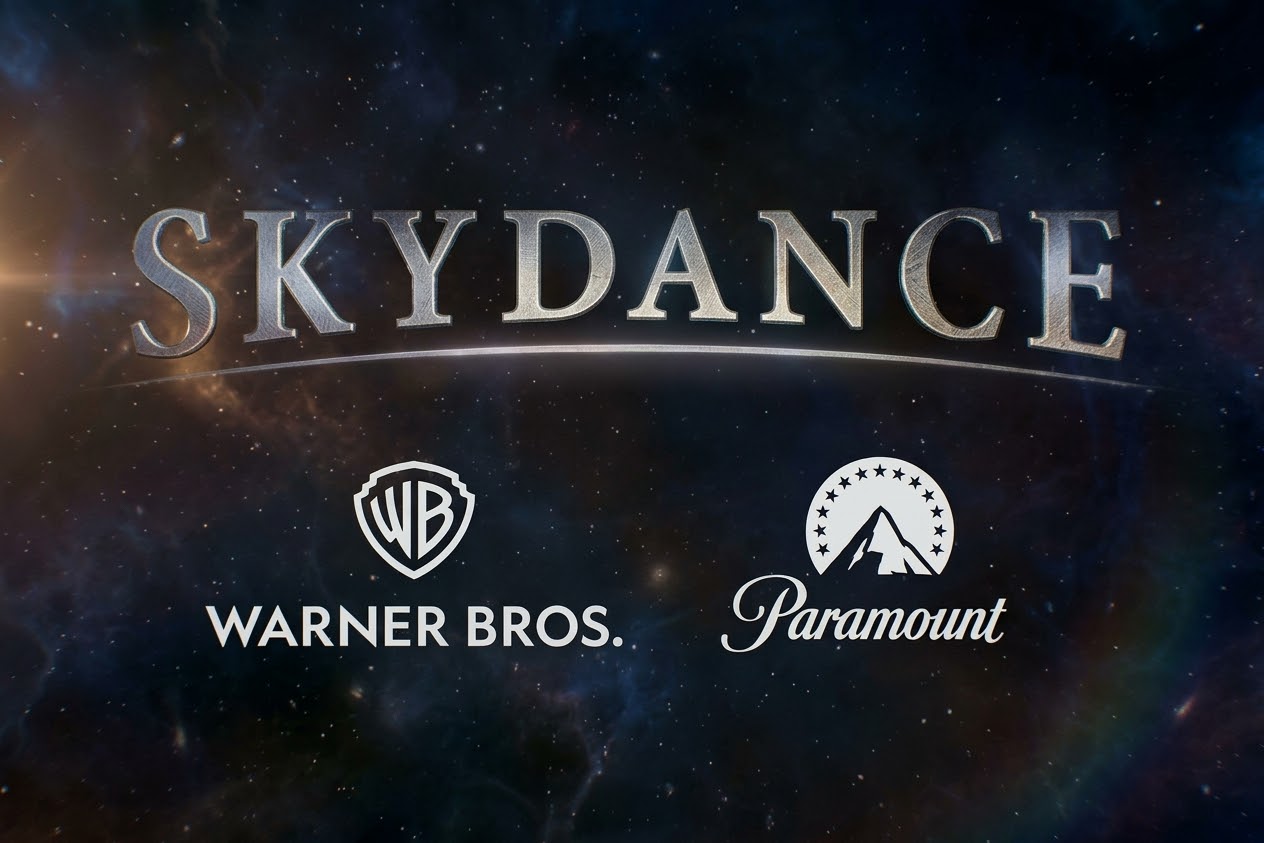
Hollywood has effectively shrunk from the traditional “Big Five” studios to a more concentrated “Big Four.” With the absorption of Warner Bros. Discovery’s assets, Skydance now stands alongside Disney, Sony, and Universal. Wall Street saw the shift immediately as Skydance Class B shares began trading on the NYSE under SKYD.
The financial terms remain staggering. Warner Bros. Discovery shareholders received $31.02 per share in cash, plus accrued ticking fees. The all-cash equity portion totaled roughly $81 billion, making it one of the largest media consolidations in modern history.
Funding came from multiple international partners. David Ellison’s investment group partnered with Gerry Cardinale’s RedBird Capital Partners and non-voting sovereign funds from Saudi Arabia, Qatar, and Abu Dhabi. Tech titan Larry Ellison also pledged substantial personal collateral to secure bridge loans.
The combined entity now operates simply as Skydance. David Ellison serves as chairman and CEO, while former Mattel leader Ynon Kreiz becomes co-CEO. Together they must reconcile legacy film operations with aggressive technology mandates across distribution channels.
Outbidding Rivals and Clearing Legal Hurdles
Reaching the finish line required defeating established digital rivals. Warner Bros. Discovery initially pursued an $82 billion acquisition agreement drafted by Netflix. Skydance counterbid and eventually reimbursed Netflix a $2.8 billion breakup penalty to take the lead.
Legal challenges followed. State regulators argued that extreme consolidation would limit audience options. A coalition of twelve state attorneys general and Hollywood guilds sought to block the takeover in federal court. Supreme Court Justice Elena Kagan denied an eleventh-hour emergency petition, clearing the final obstacle.
To satisfy antitrust scrutiny, management signed a binding consent decree with extensive theatrical and production commitments. Skydance pledged to release at least 30 feature films theatrically each year across both studio banners. The company also agreed to operate both historic physical studio lots in Southern California for five full years.
Unifying Vaults and Streaming Platforms
The new powerhouse controls one of the most prolific intellectual property libraries in global film history. Skydance now oversees the expansive DC Universe, “Harry Potter,” and Middle-earth, alongside the “Mission: Impossible” and “Top Gun” franchises. This consolidation gives production executives vast leverage over merchandising, international licensing, and digital syndication.
In streaming, the transaction reshapes the direct-to-consumer landscape. HBO Max and Paramount+ have a combined subscriber base exceeding 200 million paying users. Executives confirmed that both catalogs will eventually converge into a single unified application over upcoming product cycles.
“Today is a historic day, not just for Skydance but for our entire industry,” Ellison said in an official statement. He noted the deal allows the studio to compete directly against deep-pocketed Silicon Valley streaming giants. By consolidating engineering teams and marketing budgets, the company hopes to curb subscriber acquisition churn.
Newsrooms, Live Sports, and Editorial Commitments
Beyond film and streaming, the merger brings together two of America’s most recognizable broadcast journalism institutions. CNN and CBS News now fall under the same corporate ownership, raising scrutiny over journalistic independence. Current leadership will remain distinct, with Mark Thompson running CNN and Bari Weiss guiding CBS News.
To address concerns over corporate bias, Skydance established a mandatory editorial oversight council. This independent panel of veteran journalists will monitor operations and defend editorial integrity across both newsrooms. Maintaining credibility remains critical as political commentators watch how leadership handles sensitive coverage surrounding major national cycles.
Live sports rights also gain leverage under the new structure. The portfolio merges CBS Sports’ production capabilities with TNT Sports’ premium domestic basketball and baseball assets. This combined athletic footprint strengthens distribution deals when negotiating cable carriage and high-tier streaming sports packages.
Wall Street Skepticism and the $80 Billion Debt Shadow
Despite celebratory corporate memos, financial markets greeted the completed transaction with caution. Shares of the newly christened SKYD dropped nearly eight percent during initial trading sessions on the NYSE. Analysts pointed to severe balance-sheet overhangs, noting the combined enterprise begins operations with nearly $80 billion in net debt.
Co-CEO Ynon Kreiz must oversee aggressive operational collaborations to satisfy rating agencies and equity investors. Skydance set a firm target of $6 billion in annualized cost cuts within the next 36 months. Industry watchers anticipate substantial restructuring, including duplicate positions and departmental layoffs across back-office divisions.
Declines in traditional cable television subscriptions continue to drain operating cash flow. Network assets such as MTV, Nickelodeon, and TBS face ongoing ratings pressure from fast-moving social platforms. Skydance must fund heavy digital platform investments while using legacy television margins to retire elevated corporate borrowing.
Navigating the Future of Hollywood Consolidation
Hollywood now enters an intense era marked by aggressive consolidation, high financial stakes, and shifting creative priorities. David Ellison bet his family’s vast resources on constructing a legacy studio with technological infrastructure capable of rivaling tech titans. Balancing $6 billion in promised cost savings against mandatory 30-film release schedules will test creative partnerships.
The creative community is watching to see whether the new studio will foster risk-taking theatrical narratives or safe corporate formulas. If integration runs smoothly, Skydance gains significant leverage over talent agreements, cinema owners, and subscription audiences worldwide. Any failure to reduce debt below $80 billion could trigger painful asset divestitures across key media properties.
The completed $111 billion merger stands as a defining watershed for 21st-century mass entertainment. The coming quarters will determine whether scale alone can insulate traditional Hollywood studios from structural digital disruption. For now, Skydance holds the keys to legendary storytelling kingdoms as it begins an ambitious corporate journey into uncharted media territory.
Comments are closed.