10 Nigerian Women on Why One Income Is Never Enough
A salary that covers the bills does not always translate into financial security. Many people are still saving for a major move, supporting relatives, or making sure they could leave a job or a relationship without worrying about survival. In Nigeria, a struggling economy and the rising cost of everyday living have turned side hustles into a necessity for many. Ten Nigerian women explain why a second income feels essential, what one salary cannot cover, and whether they would drop the extra work if their main income could handle everything.
“I Didn’t Know Where My Next Meal Would Come From” — Vivian, 30, Ibadan
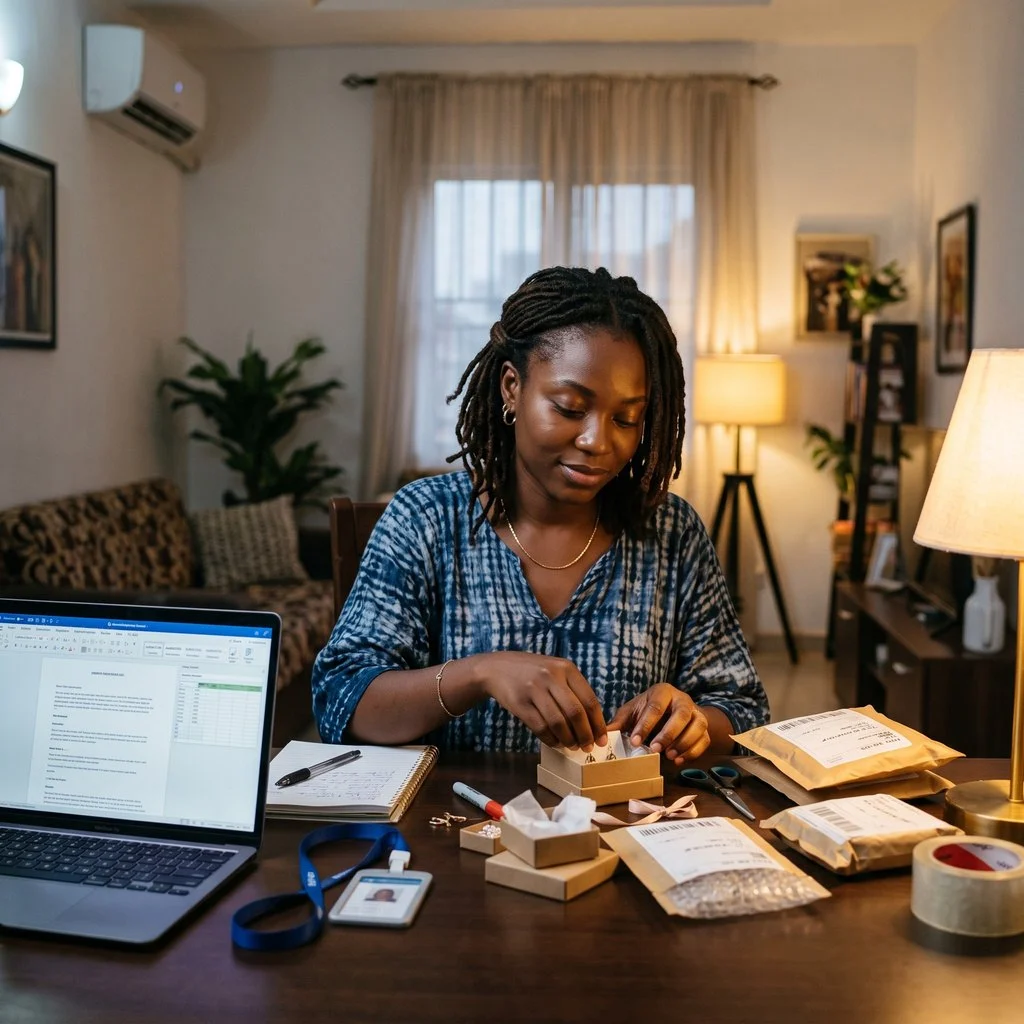
Vivian earns 400k a month as a social media associate. Her salary pays her bills and covers black tax, while her flower shop brings in an extra 300–500k monthly. She has experienced times when she did not know where her next meal would come from, and having another source of income makes her feel more financially secure. Even if her salary comfortably covered all her expenses, she would still want the extra income. She enjoys testing her skills, trying new things, and having enough money to spend.
“A Second Income Gives Me an Exit Plan” — Ijeoma*, 30, Lagos
Ijeoma works in sales and earns close to 700k a month, with commissions in some months. Her salary covers basics like food, skincare, and beauty maintenance. She also runs a baking business, which she treats more as a hobby but which made about 1 million last year. For her, another income provides an exit plan: she can decide to quit her 9-to-5 and have something to fall back on. As a woman, being able to afford what she wants or needs feels essential to her survival. Even if her salary comfortably covered all her expenses, she would still want another source of income.
“I Want Something to Rely On If My Main Job Falls Through” — Iqmat, 32, Lagos
Iqmat earns around $4,000 a month as a content strategist and editor. Her income covers rent, groceries, bills, black tax, and spending on her partner, and she can save and invest too. She does not have a side hustle at the moment but still wants one. Before her current job, she worked two jobs for a few years, took on freelance gigs, and ran a plants-and-home-decor business. Her last side hustle paid her 700k in one month. She started that business because the company she worked for between 2020 and 2022 was shutting down, and she realised she was helping other people build their dreams while putting hers off. The business gave her a sense of ownership, and the extra money made her feel more secure. It is now on hiatus because, she says, the model does not work in a country where most people do not have disposable income. She would like to start something else, even though her salary covers her needs, so that she has something to fall back on if she leaves or loses her job. This time, she would prefer something that makes money without needing her daily input or too much of her time.
“It Helps Me Care for My Mom” — Gail, 31, Lagos
Gail is a freelancer earning around ₦250,000 a month. She lives with her mum, so she does not pay rent, but she covers electricity, cooking gas, her mother’s health expenses, and other household bills. She sometimes helps her sister and two cousins as well. What is left goes towards food, gifts for friends, and, when possible, savings. She bakes and makes resin art on the side, although that income varies each month. The extra money helps her make her mum’s life easier. It is also about independence: she believes someone who feeds you can also starve you, and she does not want anyone to have that kind of power over her. Even if her main income covered everything, she would still want a side hustle, especially if it lets her do something she loves. She values the access and freedom money gives her.
“My Salary Alone Can’t Cover My Japa Plans” — Dara*, 26, Lagos
Dara earns 200k a month as a social media manager and content creator. Her income mostly goes towards savings, data, and transport, and her parents make sure she does not have to contribute too much to household expenses. She is saving to leave the country, and her salary alone cannot reach that goal. On the side, she helps people write proficiency exams and runs a jewellery business. Each exam gig pays around 500k, so four in a month can bring in about 2 million, depending on how many gigs she gets. The jewellery business brings in an extra 15–20k weekly. She puts 70% of everything she earns into savings to reach her goal by next year. Beyond that, she believes everyone should have another source of income, even if their salary covers their expenses, because life is unpredictable and a safety net helps.
“I Wouldn’t Have to Borrow Before the End of the Month” — Christine*, 30, Ibadan
Christine works as a social media manager and a product manager, earning 100k from each job. Most of that money goes towards food, caring for her three dogs, and supporting her mum. She also tries to save towards her 400k rent, but sometimes she runs out of money before the end of the month and has to borrow from friends. Despite four years of experience as a social media manager, she is still offered jobs that pay 100k or less. She has also been meaning to get a new laptop but cannot afford to save for it. She is starting a tigernut business because her current income barely covers her bills. She wants to stop borrowing and start saving for emergencies. Even if her salary eventually covered everything, she would still want another source of income, because a 9-to-5 can be lost without notice and she wants something to fall back on.
“I Earn an Extra 500k Monthly” — Esther*, 28, Lagos
After NYSC, Esther was broke and jobless, so she moved in with a guy she was dating at the time. He provided the basics but treated her badly and was verbally abusive. He also refused to help her start a business even though he could afford to, then stole her idea and executed it poorly. That experience shaped how she feels about money, and she has a crippling fear of not being able to afford what she wants. Having more than one source of income makes her feel safe. Her main income now comes from an export business she runs with her current partner, with a salary of about 800k a month. She also writes scripts, manages social media for brands, and earns from two farms, bringing in an extra 500k. The money pays her bills, makes black tax more bearable, and allows her to contribute to the savings she and her partner are putting towards their marriage. Even if her main income covered everything, she would still want other sources. This is Nigeria, she says, and anything can happen; knowing she has something to fall back on gives her peace of mind.
“My Main Job Does Not Sustain My Lifestyle” — Seyi*, 30, Lagos
Seyi works in business development and earns about $3,000 a month. It covers food, transport, data, and household bills, and she saves towards rent and other needs. She also has a contract role that pays $2,000 a month. She realised she needed more than one source of income because many Nigerian companies do not pay enough to sustain your lifestyle and set money aside for other things. While the extra money has helped her feel more grounded, she still wants another source of income. Working two jobs is draining, but she needs to save more.
“I’m Chronically Ill, and My Meds Are Expensive” — Onome*, 32, Lagos
Onome is a writer and editor earning 350k a month. She is also chronically ill. She spends 50k on medication monthly and can spend up to 150k when she needs to see a doctor or run routine tests. Her HMO barely covers these costs. Her salary also goes towards food, data, and black tax, so it does not always stretch far enough for her to save. She takes on tutoring, exam invigilation, writing, editing, and ushering gigs, which bring in an extra 100–150k on average. That money helps her save and pay her rent. Having extra income feels necessary to her because her healthcare expenses are too high. If her salary comfortably covered all her needs, she would not take on extra work, because it is stressful and stress makes her symptoms worse.
“Adult Toys Bring Extra Income” — Tee, 30, Lagos
Tee works as a test centre administrator and earns 250k a month. Her salary does not cover much beyond basic groceries and saving towards rent. With how hard things are in the economy, having extra income feels necessary. She sells adult toys on the side and makes about 50k monthly, just enough to cover miscellaneous expenses. She does not feel more financially secure, but it is better than nothing. She is also an enthusiast of self-pleasure, so she is killing two birds with one stone. Even if her salary comfortably covered all her expenses, she would keep selling adult toys because she is a huge advocate for sexual satisfaction.
Comments are closed.