10 Nigerian Women Share How Financial Independence Transformed Their Lives
When someone else controls the money, saying no can feel impossible. A falling-out might cost more than the relationship itself, especially if you still need their help tomorrow. That dynamic can push women to agree to things they don’t want, stay quiet when they’re upset, or work hard to stay in someone’s good graces. But a growing number of Nigerian women are earning their own income and rejecting dependence as a default setting.
Financial independence changes more than a bank balance. It can reshape family relationships, career decisions, what a woman is willing to tolerate, and the everyday choices she can finally make without asking permission. Ten Nigerian women shared what financial independence actually changed for them — and their answers went far beyond paying their own bills.
Freedom to Choose Without Permission
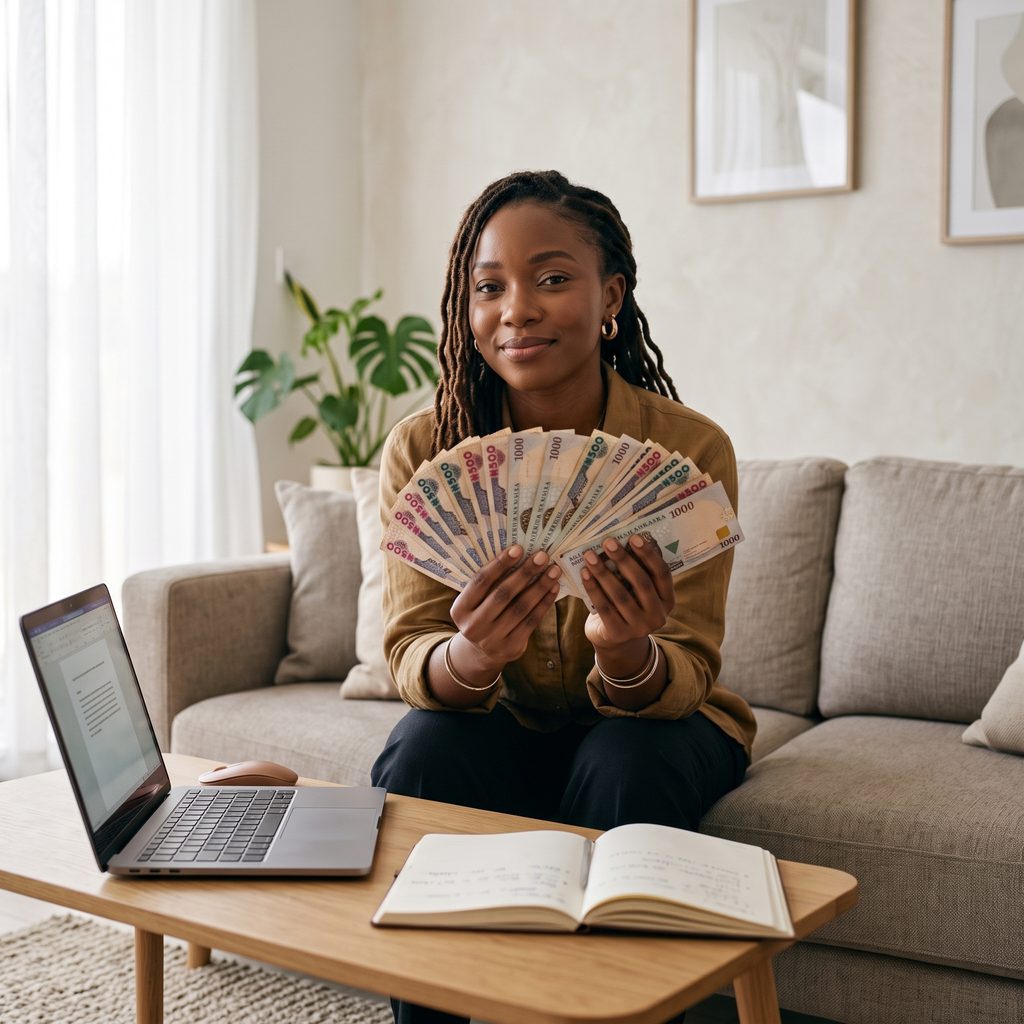
Hope*, 32, Editor
Hope earns $3,800 a month as an editor. She remembers needing to ask her parents for money to do the things she wanted when she was younger. Now, she handles those things herself.
“It has given me the freedom of choice,” she says. She can decide to travel somewhere, pierce her ears, or get a tattoo without asking anyone. She can also pay for help with tasks she’d rather not do herself.
From ₦10k to Between ₦600 and ₦1.8M
Chi*, 29, Media and Communications
Chi’s income grew from ₦10,000 a month to somewhere between ₦600 and ₦1.8 million. She always aimed for financial independence because she realised early that it matters for women to have their own money. She saw this in films she watched growing up and within her socioeconomic group. She also likes the good things in life — when she saw music videos of women dancing while men sprayed money, she wanted to be the one throwing money around.
Financial independence gave her agency. She doesn’t have to depend on people or wait for their permission. When she wanted to move cities, telling her parents was more of a formality because she didn’t expect anything from them. Her own money made the move possible. It also gave her more self-trust and made it easier to cut people out of her life when they became a nuisance.
Earning $4k Monthly and Building Independence
Chinasa*, 31, Enugu, Narrative and Communications Strategist
Chinasa previously earned an average of $4,000 a month from her full-time job and business combined. She now runs her consultancy full-time, and her earnings are project-based, so there’s no fixed monthly figure.
For her, financial independence means caring for herself and the people she loves. She used to depend on her parents financially. Having her own money made it easier to make decisions without relying on someone else’s support or approval. Getting her first apartment was a big part of that — she did it against her parents’ wishes, and sustaining that independence over the years has meant a lot.
She has also moved cities on her own terms. A new pressure she’s navigating is asking for help when she actually needs it. It’s hard because she’s used to handling things herself, and people overlook that she does need help sometimes. Still, having her own money meant she could finally have her own room.
Meeting Needs and Doing Impactful Work
Ediomo*, 25, Freelancer
Ediomo is a freelancer earning between ₦500,000 and ₦750,000. She has worked across non-profit projects, graphic design, and real estate. Having her own money means she can afford everything she needs and choose work she cares about, rather than making career decisions out of survival.
It has also changed her relationship with her dad. She grew up in a middle-class family where her dad was the primary breadwinner. They were comfortable, but he was financially abusive. They had to ask for basics like food and toiletries, and he’d make them write lists to defend what they needed. He scrutinised everything, gave them about a third of the money, and constantly reminded them how much they depended on him.
When she moved out and started supporting herself, she stopped calling. She no longer needed his money, so she didn’t have to put up with him. He eventually started making an effort to be in her life. She was distant at first, but over time she noticed he was trying and acknowledging his mistakes. Having her own money also helped her understand his fear that they wouldn’t have enough, though his approach made them feel that way anyway. Their relationship is still strained, and there’s hurt she hasn’t let go of, but she loves and respects him now. Financial independence gave her the freedom to step away, and eventually, the choice to let him back in.
Confidence and the Freedom to Quit
Joy*, 30, Operations
Joy works in operations and earns ₦300,000 monthly. For her, financial independence means paying all her bills and making decisions without asking anyone for money. Having her own money has made her less anxious. She used to depend on her dad financially, but not anymore.
She’s more confident in herself, and that scares him because he’s no longer in control of her decisions. The biggest change was being able to quit a job she’d been at for three months without a backup plan, and she didn’t care what her parents would say. She also has her own apartment, so she can come and go as she pleases without answering to anyone like she’s a child.
Financial independence has brought new pressures, though. There’s a black tax, though she’s managed to reduce it significantly in the past year. She also has to manage unexpected expenses in this economy, and she feels like she always has to have everything figured out. Still, she’s glad she no longer has to depend on other people or please them at her own expense.
Confidence to Start a Business
Amara*, 30, Social Media Associate
Amara earns ₦385,000 a month as a social media associate. For her, financial independence means having her own money and being able to call the shots on how she uses it. She has never really depended on anyone financially because she’s always had herself.
The biggest change having her own money has brought is the confidence it has given her to start her own business. She has a lot of trust in her own decisions now.
No Longer Relying on Parents for Wants
Dara*, 22, Journalist & Writer
Dara works as a journalist and writer, earning between ₦150,000 and ₦200,000 a month. For her, financial independence means being able to make decisions about her life without another person’s permission. She used to rely on her parents. Sometimes, the things she wanted could be used to punish her. Other times, she’d have to give them up because her younger siblings wanted something.
Now she can buy things she likes without having to explain why she needs them. She’s also firmer with her boundaries. She was able to fix her phone without asking them for help. If she waited for them, she might have gone a week or more without a phone. She’s not making a lot, but knowing she can take care of herself has given her a sense of freedom.
Having her own money has also brought some black tax. Her siblings expect her to help them, especially when they can’t ask her parents. When she’s at home, certain responsibilities automatically fall to her, and she hates that. Still, she can finally do things on her own without waiting for permission.
Living a Truly Unconventional Life
Lade*, 34, Aesthetician and Operations
Lade earns $40,000 CAD annually. For her, financial independence means having enough to cover unforeseen expenses after paying her bills, without worrying. She used to rely on her dad financially. Their relationship has always been distant, and that hasn’t really changed. What’s different now is that she controls when she talks to him. She doesn’t feel obligated to call because she needs something from him or worry that he might weaponise her silence or distance against her.
Having her own money has given her the freedom to live the truly unconventional life she knows she’s meant to have. It means her life doesn’t stop because she’s not dependent on someone else in big, impactful ways. She has the final say on her decisions, and she can make choices that honour who she is without relying on anyone else to make them possible.
She’s also moving apartments, which is a big deal for her. The last time she moved, her dad handled the expenses. Two years later, she’s doing it herself, and she feels very proud. There’s still some pressure to make more money and take better charge of her life, but having her own money has made it possible to live on her own terms.
Decisions Without Desperation
Oyin*, 32, Lagos, Artist and Media Practitioner
Oyin is an artist and media practitioner, and she earns around ₦2 million monthly. For her, financial independence means being able to afford her needs and wants without relying on anyone. The biggest change is that she can make decisions without desperation. She noticed this when she left a job that almost took her life. She knew her savings could tide her over until she got back on her feet.
Before now, she used to rely on her parents. They always came through for her, even when they were struggling themselves. Now, she takes care of them. It has also made travelling possible for her, and her living conditions have improved significantly.
Having her own money isn’t without its own pressure, though. She has to deal with the black tax. She loves taking care of her parents, but she knows how to enforce boundaries when she needs to. There’s also the pressure she puts on herself to keep making more money. That said, having her own money means she can finally breathe well.
Buying What She Wants and Saying No
Tee*, 27, Banker
Tee earns about ₦900,000 a month. For her, financial independence means being able to buy what she wants without consulting anyone or waiting for someone to give her the money. Her parents supported her through university, but that stopped after she graduated. Some friends helped, and she picked up a side hustle while waiting for NYSC. She got her current job after service, and she’s been taking care of herself since.
The biggest change is being able to say no to people she doesn’t want in her life because she knows she can take care of herself. While she was house-hunting, she met an “abroad” uncle who got involved in the search, and she expected him to contribute to her rent. A few weeks later, he reacted irrationally to a she shared because she’d blurred out her breasts. She couldn’t understand why he felt entitled to her body, so she blocked him without worrying about the money he hadn’t sent.
It has also made things she once struggled with easier. She can afford data subscriptions, which were a problem when she was unemployed. She can also travel by air, and that has been a highlight of her financial independence. A new pressure she’s navigating is black tax from extended family. Her immediate family doesn’t pressure her for money, but the requests from extended family stress her out. She’s learnt to ignore some messages because sometimes she’s already having a bad day, then she comes online to meet billing. Still, she’s grateful. Having her own money has made it possible to be her true self without having to kiss anyone’s ass.
What Financial Independence Really Changes
Across these ten stories, a pattern emerges: financial independence is rarely just about money. It’s about the freedom to make decisions without permission, to leave situations that no longer serve you, and to set boundaries with family and partners. It’s also about the confidence that comes from knowing you can take care of yourself.
But the women also spoke candidly about the pressures that come with earning more — black tax, the weight of always having to figure things out, and the difficulty of asking for help when you need it. Financial independence doesn’t erase every problem, but for these women, it has given them something they wouldn’t trade: the ability to live life on their own terms.
Comments are closed.