10 Women on Growing Up as the Only Daughter Among Brothers
Growing up as the only girl among boys can look very different from one household to the next. Some women describe brothers who protected them and parents who treated all their children the same. Others describe being expected to cook, clean, and care for their brothers simply because they were girls. Below, ten women talk about what it was like to be the only daughter in their families, and how those years shaped their relationships with their parents and brothers.
“She Didn’t Place Any Pressure on Me Simply Because I’m a Girl” — Okiki*, 26
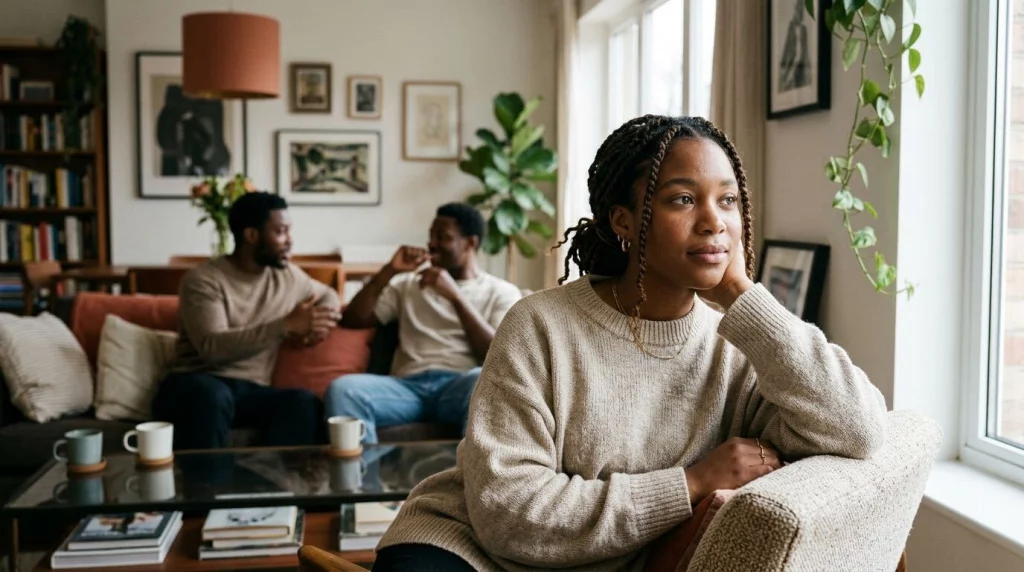
As the only daughter and the youngest sibling, Okiki says she was heavily spoilt. She grew up not knowing how to do many things, she explains, because her home did not believe in letting their daughter suffer while the boys enjoyed. Her parents employed maids so the children would not have to lift a finger. Her mother, unlike those of many of her friends, did not apply double standards between her and her brothers. She was never put in charge of caring for her brothers or asked to cook for them, because her mother expected them to know their way to the kitchen. Okiki says her mother made sure not to place any pressure on her simply because she is a girl, and both parents treated all the children equally. She never felt out of place as their only daughter.
“If They Got Into Trouble, I Got the Lashings” — Dami*, 30
Dami is the first child and only daughter, with younger twin brothers. Her father, she says, did not treat them differently, but her mother did. Although Dami is only two years older than her brothers, she became responsible for them before she could even define responsibility. She had to care for them, wash their clothes, and cook for them — and if they got into trouble, she was the one who received lashings from her mother. She says she never had a moment of peace because of her brothers. Even when they grew up, she was still the one cooking and caring for them, because her mother could not accept the idea of her “baby boys” doing domestic chores while their sister was around. Dami resented her mother and brothers for this. As soon as she began earning a comfortable income, she moved out and did not look back. She rarely visits home now, she says, because she cannot bear to look at her mother without resentment rising in her.
“Because of My Mum, I Have a Weird Relationship With Boys” — Chidera*, 24
Chidera’s mother likes to say she treats her son and daughter equally. While Chidera allows that this may be true to an extent, she cannot forget the warnings she received before she even knew what sex was — instructions such as “don’t let men touch you, or else you’ll get pregnant” and “make sure not to befriend any boy.” Her brothers, she says, received no sex education at all from either parent. They were allowed to befriend girls in their classes, while Chidera avoided boys throughout primary school because she was convinced that if they touched her she would immediately become pregnant. She also remembers being 13, when her mother slapped her and seized her phone for six months because she was talking to a male friend. That same energy was not extended to her younger brother when the family found out he had a girlfriend to whom he was giving all his feeding allowance. Chidera says she does not hate her mother, but that because of her she has a difficult relationship with boys and intimacy, and it is taking her time to unlearn.
“The Bullying I Faced Was Traumatising” — Lola*, 25
Lola has two elder brothers who are four years older than she is, and she describes the bullying she faced at their hands as traumatising. One minute, she says, they could all be laughing together, and the next one of them would beat her so badly it seemed they genuinely hated her. The beatings left her body in pain, but that is not the part that hurt most. What hurt most was going to her mother for comfort and to have her brothers reprimanded — and never getting it. Her mother would tell her to stop crying because she was no longer a baby, and would remind her that her brothers acted that way because that is how boys act. Lola says this seriously affected her as a teenager. She is still very much in contact with her mother and brothers, but sometimes resents them for what they did. She was a child, she says, and did not deserve that.
“I Was Allowed to Be a Useless Girl” — Olivia*, 21
Olivia does not think growing up among brothers affected her in that way, and she credits parents who did not treat anyone differently. She was allowed to be a girl who simply existed on her own terms. She did not have to be responsible for any of her brothers, because her parents expected all of them to figure things out on their own. She was allowed to be what society would call a “useless girl” — meaning a girl who did not know how to cook, do her laundry, or clean the house. Her parents, she says, raised her the way they raised her brothers and did not place unnecessary pressure on any of them to do household chores. It was not until after secondary school that she felt she needed to learn to cook for herself.
“Everyone Avoided Me Because of My Brothers” — Mary*, 21
Mary says she hated having brothers while growing up. They took on the role of protective bodyguards who chased people away from her life. If they saw her talking to a boy, they would go behind her back and threaten him to stay away. She could not even have a boyfriend, because they would either rough him up or tell their parents. Almost everyone at her school and on her street began avoiding her because they were afraid of what her brothers might do. Mary acknowledges that some people might think protective brothers are a good thing, but she says they have never cried at night praying for God to kill them because no one wanted to be friends with the girl who had feral elder brothers.
“I Feel Like a Discarded Child They Don’t Want” — Amina*, 20
Amina has two brothers, one older and one younger, and she always felt out of place at home because it seemed to her that her parents loved them more than they loved her. They always denied it, she says, but she could see that they had favourites, and it was never her. Her father would get her younger brother anything he wanted, but if she asked for the same thing he would come up with reasons why he could not buy it for her. When her elder brother lost his phone, her mother easily got him a replacement; when Amina lost hers, it took a whole month to get a replacement. She does not feel she can rely on her parents, because they do not seem to love her in any way. They clearly see her brothers as some sort of blessing, she says, but she feels like a discarded child they do not want.
“I Didn’t Have to Hide a Part of Myself From Them” — Julia*, 26
Julia’s parents were barely involved in her and her brothers’ lives because they were so busy putting food on the table, so most of the time the siblings had only each other to rely on. Because of that, she learned a lot from them. She struggled a great deal with her identity and sexuality from a young age and always felt she had no one to talk to. Society already perceives people like her as immoral, she says, and she was scared of letting anyone know that she preferred to kiss girls rather than boys. Her first brother found out, and instead of shaming her, he talked to her and let her know there was absolutely nothing wrong with her. Her other brothers also talked to her, and she remembers beginning to feel relaxed enough to tell them about the girls she liked. Because of them, she says, she did not feel she had to hide a part of herself from the people she loves, and she learned a lot from them too.
“It Was Forbidden to Talk to My Brothers Casually” — Tolu*, 27
For Tolu, having brothers as the only daughter was more of a curse than a blessing, because it exposed her to how much society would sacrifice for its boy child. It felt, she says, as though she had been born to serve her brothers. Her parents expected it of her; relatives would call her lazy if they saw a brother going to the kitchen to cook; and the women in her life looked at her with disgust if she so much as asked why she had to cook for her brothers when their hands were working perfectly well. It was even forbidden for her to talk to her brothers casually, because that was apparently disrespectful by societal standards — a rule that never made sense to her. If her brothers spoke casually to her, it was normal, but if she did the same, she lacked respect. She still does not understand how that works.
“I Don’t Know Why I Have to Be a Housemaid for Them” — Cynthia*, 29
Cynthia did not realise her parents were raising her and her brothers in unconventional ways until relatives began living with them. She did not know it was considered a girl’s job to cook for her brothers when they were hungry until an aunt who was living with them started berating her for not doing so. That was what grated on her in particular: if she was hungry, she had to cook, but if her brothers were hungry, it was still she who would cook. She never understood it, because she grew up with her brothers cooking for her whenever they cooked their own meals. Cynthia is not a fan of cooking, and her parents never shamed her for it — but her aunt suddenly began judging her, exposing her to the double standard that only daughters face in their homes. It does not make sense to her that she has to be a housemaid for her brothers. That, she says, is not why her parents gave birth to her.
Comments are closed.