How Much Does It Cost Women to Maintain Beauty Standards in 2026?
Hair that needs redoing three weeks after a ₦50,000 appointment. Nails that have grown out. Skincare running low. Perfume almost finished. An event next weekend that demands another round of spending. For many women, beauty maintenance is not a one-off cost but a recurring commitment that consumes both money and time.
In Nigeria, beauty and personal care represent a multi-billion-naira market. According to Euromonitor, the country’s beauty and personal care retail value grew by 23% in 2025, reaching $10.17 billion, with skincare and colour cosmetics maintaining demand despite inflation. Yet the scale of the industry only tells part of the story. For women, the true cost of beauty lies not just in what they buy, but in how often they must buy it again and the effort required to maintain an expected appearance.
To understand this better, seven women shared what they spend on beauty and appearance, what they consider non-negotiable, whether they enjoy the process, and whether they have ever felt pressured to spend more because of how they might be perceived.
What Seven Women Spend on Beauty Maintenance
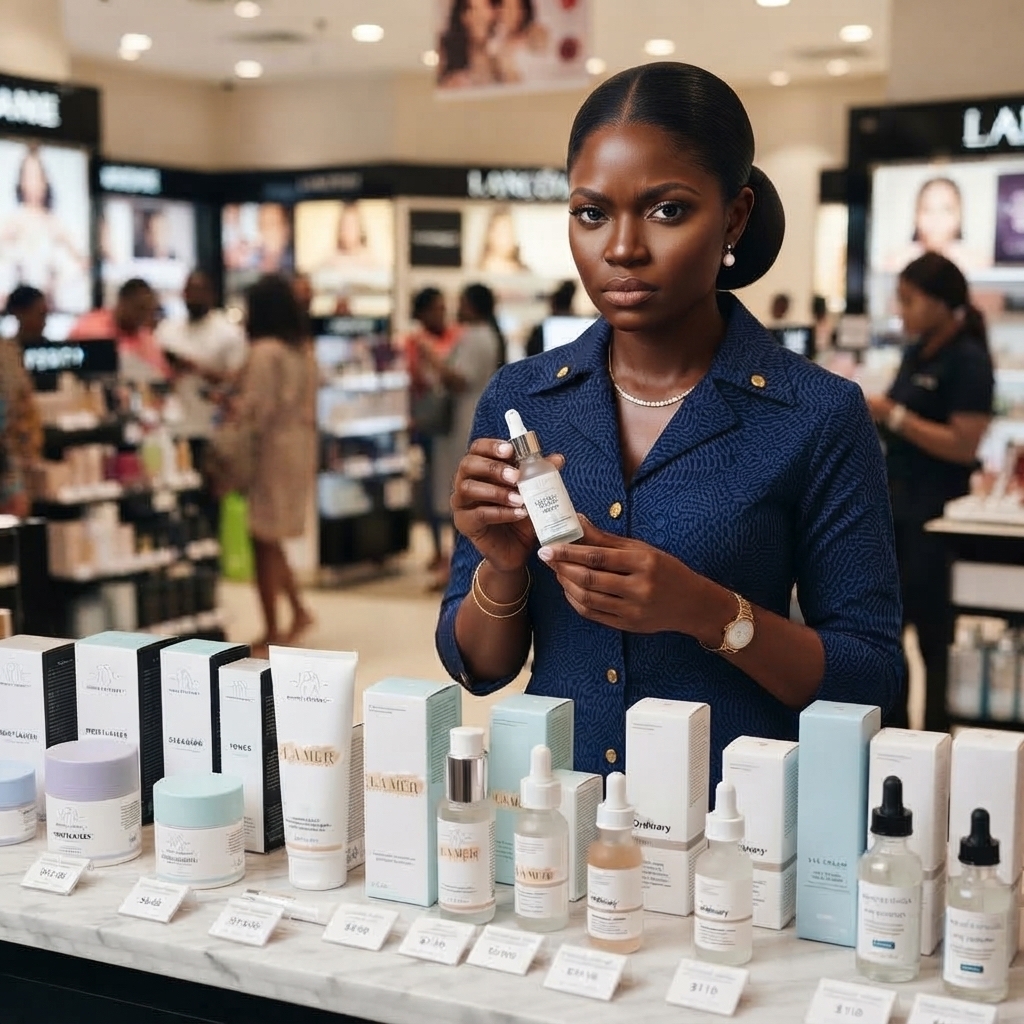
Salmah*, 44, Business Entrepreneur: ₦500,000 a Month
Salmah’s beauty spending is specific. Her hair is in locs, maintained by her daughter, so that expense is eliminated. She focuses on skincare, nails, and perfume. Skincare restocking costs between ₦90,000 and ₦150,000, while waxing runs ₦30,000 to ₦50,000. Her largest expense is fragrance: she can spend ₦250,000 to ₦300,000 monthly on perfumes and Tuaren Wuta (traditional incense perfume), especially when buying something new or restocking.
All together, Salmah spends roughly ₦500,000 a month on her appearance. Perfume is her non-negotiable. “I like smelling good, and I’ve always believed that how you smell is part of how you present yourself,” she says. If she had to cut back, she would reduce skincare before compromising on fragrance. She genuinely enjoys taking care of herself but focuses on what she personally values rather than following every trend. As a business owner, she meets different people constantly, so being presentable matters, but she has become confident in deciding what that means for herself. “I don’t think I need to spend money on every beauty service just because other women are doing it,” she says. “At the end of the day, I’d rather have my locs, good skin, and smell expensive.”
Adaeze*, 28, Chef: ₦115,000 a Month
Adaeze’s expenses are higher because fitness is part of her routine. Her gym membership costs about ₦30,000 per month, and she spends roughly ₦40,000 on face wash, moisturiser, and sunscreen. Hair is around ₦20,000 when needed, while nails and smaller items add another ₦25,000. When everything falls in the same month, she spends around ₦115,000 on maintaining herself.
The gym is her non-negotiable. “For me, it’s not just about looking good. I like how I feel when I’m exercising consistently, and I’ve noticed a difference in my confidence and energy,” she says. She enjoys some aspects of beauty maintenance but feels women are constantly given new things to fix. “Your skin should be clear. Your hair should be laid. Your body should be a certain shape. Your teeth should be perfect. Your nails should be done. You should smell good. At some point, it stops feeling like one beauty routine and starts feeling like an endless maintenance project.” Social media adds to that pressure, she notes, because there is always someone looking more polished, making that standard feel like the norm.
Treasure*, 31, In-House Legal Counsel: ₦95,000 to ₦115,000 a Month
Hair is Treasure’s biggest beauty expense, costing between ₦30,000 and ₦50,000 depending on the style. Nails are around ₦15,000, and skincare and body care can reach another ₦50,000. She does lashes for certain events but does not maintain them monthly. On average, she spends about ₦95,000 to ₦115,000 when everything lines up in the same month.
Her hair is non-negotiable. “I feel completely different when my hair is done properly, and since I interact with people a lot, I like to look put together,” she says. She genuinely enjoys beauty and getting ready, so she won’t pretend it all feels like a burden. “But sometimes I do wonder why being a woman is so expensive. There’s always something that needs to be done, replaced, touched up or maintained.” Events make her spend more. If a wedding, birthday, or other important social event is coming up, her normal beauty budget suddenly isn’t enough. “You start thinking about whether your hair looks good enough, whether you need your nails done, whether your skin is behaving and whether you need makeup. It can feel like there’s an unspoken expectation to show up looking a certain way.”
Zoe*, 25, Journalist: ₦30,000 a Month
In a typical month, Zoe spends about ₦20,000 on skincare and haircare products, though she tries not to have everything finish at once and sets that money aside separately. Her hair has been in twists for most of the year, costing about ₦10,000. Nails cost less than ₦20,000 depending on the design, though she doesn’t get them done every month. She buys skincare every three to six months, and none of her products costs less than ₦10,000. So in a normal month, she spends about ₦30,000 on beauty, though restocking months can be more expensive.
Skincare is her non-negotiable. “I have to have my skincare products. Right now, mine is almost finished, and I’m already looking for who will dash me money to restock,” she says. She enjoys some aspects of self-care but hates the phrase “beauty maintenance.” “The things I don’t enjoy, I simply don’t do. I’ll get lashes or nails done when I have a special occasion or when I feel like it, but I don’t feel like I have to keep up with them constantly.” She used to feel pressure to spend on her appearance because of how people might perceive her, but not anymore. “These days, I just dey fight for my life, so I don’t bother. Na everybody sabi.”
Wunmi*, 26, Hotel Receptionist: ₦45,000 to ₦50,000 a Month
Wunmi’s beauty expenses are fairly simple. Hair is usually around ₦15,000 to ₦20,000 when she needs it done, while facewash, moisturiser, and sunscreen come to about ₦30,000. She might spend another ₦5,000 to ₦10,000 on nails, but lashes aren’t a regular expense. On average, she spends ₦45,000 to ₦50,000 a month, depending on what needs attention.
Her non-negotiable is anything that makes her smell good. “I can have bare nails and simple hair, but I don’t want to leave the house smelling anyhow. Perfume, deodorant and body care are more important to me than having every part of my appearance done.” She enjoys taking care of herself but likes it when it feels simple. “I don’t want to get ready to become a whole production every week just because that’s what everyone else is doing.” She used to feel pressure to spend on her appearance, especially online. “You’ll see someone with perfect hair, full makeup, lashes, nails and everything looking expensive, and suddenly your own face starts looking somehow. But I’ve reached the point where I’m not entering debt because an Instagram woman has Russian lashes.”
Abigail*, 21, Student: ₦50,000 a Month
Abigail has reduced her beauty spending because she got tired of constantly spending money on her face and body. Hair costs her around ₦15,000 to ₦20,000 when she gets it done, and she spends roughly ₦30,000 on skincare. In a normal month, she spends around ₦50,000, though that can increase when she has an event or something else to prepare for.
Skincare remains non-negotiable. “I’m not willing to completely abandon something that makes me feel comfortable in my skin just because money is tight,” she says. She enjoys the parts of beauty maintenance she genuinely likes, but she doesn’t want her existence to revolve around looking presentable. “Sometimes I ask myself, ‘Do I actually want this, or do I just feel like I’m supposed to want it?’ That question has helped me cut down on a lot of unnecessary spending.” She has felt pressure to spend on maintenance before, especially in social situations and at events, but she is now more conscious about spending money just because she is afraid of what people will think.
Temilade*, 34, Project Manager & Content Creator: ₦300,000 to ₦400,000 a Month
Temilade’s beauty expenses can get high because she maintains several things at once. Hair alone can cost between ₦70,000 and ₦100,000, while skincare is around ₦65,000 to ₦80,000. She spends about ₦20,000 on body care, ₦20,000 to ₦25,000 on nails, and ₦15,000 to ₦20,000 on lashes. Brows, waxing, and other treatments can cost an additional ₦70,000 to ₦100,000, while makeup, perfume, and miscellaneous beauty purchases add to the total.
“I don’t necessarily sit down and decide, ‘I’m going to spend ₦400,000 this month.’ It just happens,” she says. If she has an upcoming event, she can easily spend another ₦30,000 to ₦50,000 preparing for it. Depending on the month, she spends between ₦300,000 and ₦400,000 on beauty and appearance. Her hair and skin are her biggest non-negotiables. “I can cut back on some things, but those are the two things I notice immediately when I’m not maintaining them.” She genuinely enjoys getting ready and looking good, but she is aware that she has become accustomed to a certain standard. “Once you get used to maintaining yourself a particular way, reducing your routine can feel like you’re letting yourself go, even when you know that’s not necessarily true.” She acknowledges pressure from social media, work, social events, and within herself. “I don’t want to look back at pictures and feel like I didn’t look my best. Because when I really think about it, ₦400,000 is somebody’s entire salary.”
What These Numbers Reveal
The first thing that stands out is that there is no single definition of beauty maintenance. For one woman, it is mostly skincare and hair. For another, smelling good matters more than perfect nails or lashes, while someone else considers the gym part of maintaining her appearance. Other women are tired of spending money on hair and skin care because the costs keep adding up.
Looking at these numbers, it is clear that beauty maintenance is no longer an occasional expense for many women. It is a recurring financial commitment, one that can quietly take up a significant portion of their earnings. And the cost is not only about wanting to look good. For some women, being well-groomed affects how they feel about themselves, how they show up at work, how they are perceived professionally, and how comfortable they feel in social spaces. Looking good can feel less like a choice and more like part of the cost of participating in everyday life.
But there is another question worth asking: how much of this is actually chosen, and how much is maintained because women have been taught that this is what a “put-together” woman should look like? The standard keeps moving. Natural hair is beautiful, but it still needs to be laid. Bare nails are fine, but they should at least be clean and manicured. No makeup is encouraged, but your skin should look flawless. And please, smell good while you are at it. There is always another detail to fix, another product to buy, another appointment to make. In a country where salaries are already stretched across food, transport, rent, data, and family responsibilities, spending tens or even hundreds of thousands of naira a year to maintain your appearance raises an uncomfortable question: When did looking good become this expensive? And perhaps more importantly, who decided what “looking good” was supposed to cost?
Comments are closed.