From Model to Industry Builder: 9 Lessons from Fatimata Sawaneh on Representation, Beauty, and Building Your Own Table
Fatimata B. Sawaneh didn’t build Future Models of Africa from the outside looking in. She built it because she had been on the inside and saw exactly what was missing. As a model who worked with international brands and appeared on Germany’s Next Topmodel, she didn’t just experience the global fashion industry—she studied it. She watched it celebrate certain faces and sideline others. She felt the difference between being visible and being valued, between being cast because the moment called for diversity and being developed because someone believed in your career. She filed every observation away, because she knew she was going to build the answer.
Fatimata didn’t stop at modeling. She co-founded COC Collective, producing large-scale fashion shows and independently directing editorials with emerging talent. She then stepped into media as Chief Creative and Partnerships Officer at an African streaming platform, working across creative strategy, investor relations, and international representation across West Africa. By the time she launched FMA, she had worked every angle of the industry—as talent, as producer, and as executive. She knew what the gaps were, and she knew exactly how to build around them.
Future Models of Africa is a global Pan-African fashion reality competition created to discover, develop, and elevate the next generation of African models, giving them a platform to share their stories, celebrate their identities, and redefine how African talent is seen by the world. It sits at the intersection of fashion, entertainment, culture, and empowerment. It is built not just to find the next great African model, but to change the trajectory of their career, through professional development, meaningful industry connections, international contracts, and sustained access to a world that has historically kept its doors closed.
The runway was never built for Fatimata Sawaneh. So she built her own, and she is inviting the next generation of African models to walk it.
1. The Industry Will Show You Everything You Need to Know
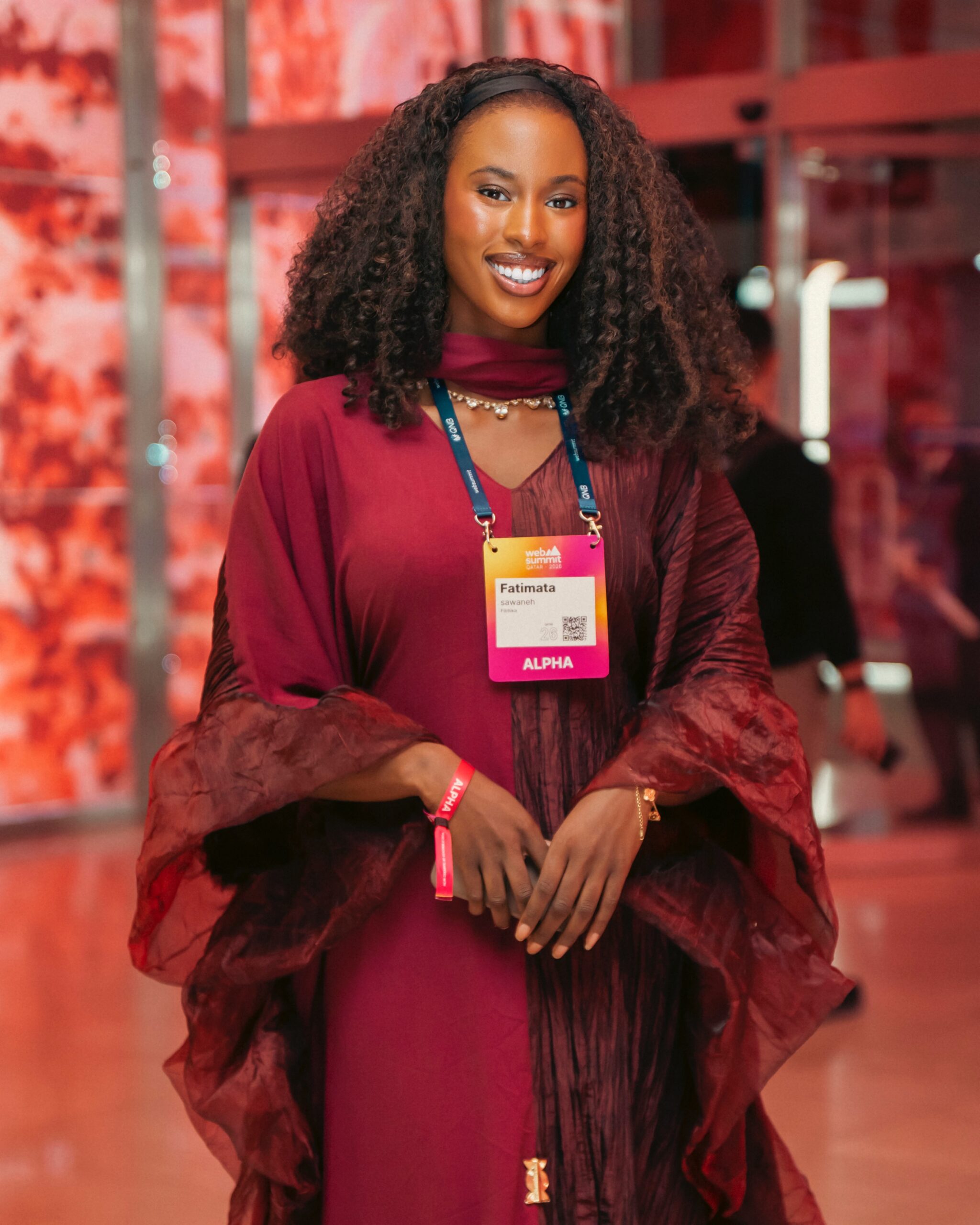
Fatimata Sawaneh didn’t read about the barriers facing African models in a report. She walked into them. Working with international brands and appearing on Germany’s Next Topmodel, she saw first-hand what the global modeling industry celebrates, what it sidelines, and what it consistently refuses to see. She noted every gap. Every closed door. Every moment African talent was treated as a seasonal trend rather than a permanent presence. And she filed them all away, because one day, she was going to build the answer.
The ability to observe an industry clearly, without bitterness and without illusion, and to convert those observations into a blueprint for something better—that is one of the rarest and most powerful things a founder can do.
2. Work Both Sides Before You Build For It

Fatimata didn’t just model. She produced. She co-founded COC Collective, organised large-scale fashion shows, worked across creative direction, and independently produced editorials and creative projects with emerging talent. She learned what it takes to build something in fashion, not just to appear in it.
Before she launched her own platform, she also served as Chief Creative and Partnerships Officer at a streaming platform focused on centering African stories for global audiences, working across creative strategy, strategic partnerships, and international representation across West Africa. She understood how media moves, how partnerships are built, and how creative content connects with the world.
The model. The producer. The media executive. Every version of Fatimata shaped what came next, and every version of her is inside Future Models of Africa.
3. Build the Answer to the Problem You Lived
All of those experiences—the modeling career, the production work, the media strategy—pointed to the same gap: extraordinary African talent with insufficient access to professional development, industry networks, and international opportunities. The gap was not about who was beautiful enough or talented enough. It was about who had access to the infrastructure that turns talent into a career.
So Fatimata built Future Models of Africa. A global Pan-African fashion reality competition created to discover, develop, and elevate the next generation of modeling talent with African roots and connections to Africa. A platform that sits at the intersection of fashion, entertainment, culture, and empowerment, and that is built not just to find the next great African model, but to develop them, connect them to the industry, and open pathways that have historically been closed.
4. Discovery Without Development Is Just a Headline
Most modeling competitions find talent and move on. The camera rolls, the winner is announced, and the platform disappears until next season. The model gets a moment. Rarely a career.
Future Models of Africa is built to stay. FMA is designed to develop talent, build meaningful industry connections, and create real pathways into the fashion world, not just a moment of visibility. Winners walk away with professional model development, the opportunity to secure an international modeling contract, prize money, and actual, sustained industry access.
The goal was never to crown someone. It was to change the trajectory of their career. That distinction is everything, and it is what separates FMA from every competition that has come before it.
5. Being Tokenised Is Not the Same as Being Represented
The global fashion industry has a long and well-documented history of including African faces without including African perspectives. Of casting Black models when the cultural moment demands it, then moving on when it doesn’t. Of celebrating African aesthetics while systematically excluding African talent from the rooms where decisions are made, contracts are signed, and careers are built.
Fatimata lived that distinction. She felt the difference between being visible and being valued. Between being cast and being developed. Between appearing in the industry and belonging to it. It is exactly why Future Models of Africa is not built around visibility alone, because visibility without infrastructure is not representation. It is decoration.
6. Stop Asking for a Seat. Build the Table.
The networks, the agencies, and the casting rooms of the global fashion industry were not designed with African talent in mind. They were built around a very specific and very narrow of beauty, one that African models have historically been measured against, found wanting, or asked to reshape themselves to fit.
Fatimata stopped trying to fit. She built a platform that challenges that entirely, that establishes its own standards, its own networks, and its own definition of what beauty, talent, and potential look like. FMA does not ask the existing industry for permission. It builds the infrastructure that makes permission irrelevant. And in doing so, it creates space not just for the models who will walk its stages, but for every African creative who has ever been told the industry was not built for them.
7. Redefining Beauty Is an Act of Resistance
FMA sits at the intersection of fashion, entertainment, culture, and empowerment. But at its core, it is a direct challenge to the outdated narratives around African beauty, African talent, and African potential that the global fashion industry has spent decades reinforcing, often without even acknowledging it was doing so.
Fatimata is not asking the industry to make room for African beauty within its existing framework. She is building a platform that establishes a new framework entirely. One rooted in African identity, African culture, and the full, unfiltered complexity of what African beauty actually looks like, in all its diversity, its depth, and its power. That is not a creative direction. It is a revolution. And it is one that is long overdue.
8. Culture Is the Story, Not the Setting
Season 1 of FMA will be rooted in Senegal and The Gambia, taking contestants through different cultural environments, fashion markets, and industry settings, both across Africa and internationally. That is not a production choice made for aesthetics. It is a deliberate statement about where the story of African fashion belongs and who gets to tell it.
African fashion, African identity, and African culture are not the exotic backdrop to a global narrative. They are the narrative. They are the reason FMA exists, the lens through which every creative decision is made, and the foundation on which the platform’s identity is built. In a global fashion industry that has long treated African culture as something to be borrowed rather than centered, FMA is a direct refusal of that dynamic.
9. Build It for the Version of You That Needed It Most
Future Models of Africa is currently in its casting phase, with applications open to aspiring models with African roots and connections to Africa, women and men who are ready to compete, to grow, and to step into an industry that FMA is actively working to reshape on their behalf.
But more than a competition, FMA is a message. To every young African model who has ever been told they are not the right look, not the right market, not the right size, not the right anything. Fatimata Sawaneh knows what that feels like. She sat in those casting rooms. She heard those words. And instead of internalising them, she built Future Models of Africa, for the girl she used to be, and for every girl who is still waiting for someone to build it for her.
The runway was never built for Fatimata Sawaneh. So she built her own, and she is inviting the next generation of African models to walk it. Casting is open. If you have African roots and a dream, this platform was built for you. Visit FMA’s official page and apply.
Comments are closed.