Gen Z Nigerians Earning ₦100k or Less Share the Dreams They Can No Longer Afford
Many young Nigerians grew up imagining a future filled with travel, independence, and comfortable homes of their own. But for a large share of Gen Z earners, that future has not materialised. According to Zikoko’s Income Report, three in four Gen Z earners take home ₦100k per month or less, putting milestones like financial independence, home ownership, or simply enjoying life out of reach.
Eight Gen Z Nigerians earning ₦100k or less shared what they once believed they would be able to afford by now — and why those expectations have collided with reality.
Deborah, 23: "I thought I'd be flying internationally, but I can barely afford fuel"
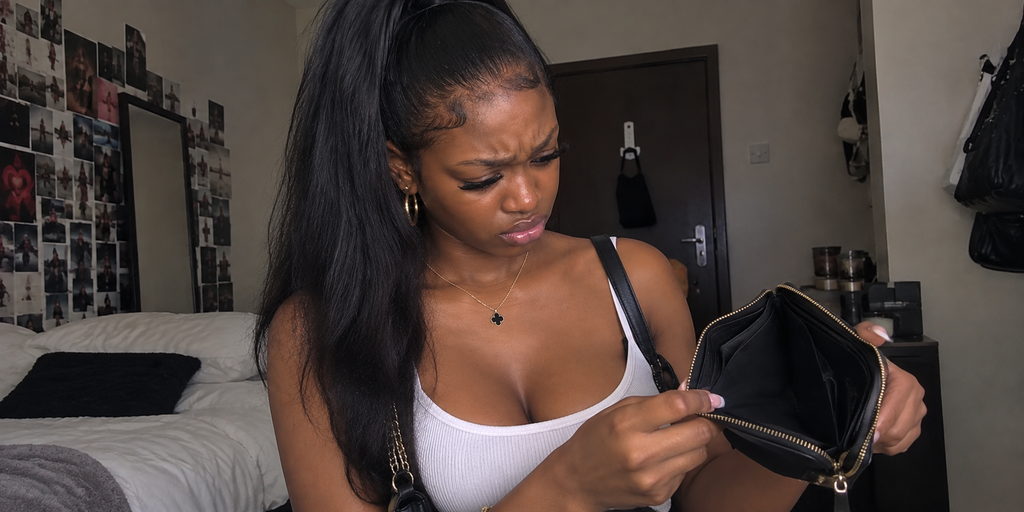
Deborah earns between ₦70k and ₦100k. She had always pictured herself flying to Dubai, London, and France, and eventually taking her family along. Those plans have not worked out because of the country’s economic situation.
Since finishing NYSC this year, she has been job hunting. The most she has secured is an unpaid auditing internship. Occasionally her boss gives her ₦20k or ₦30k to treat herself, but that is the extent of it. She still receives a ₦75k parental allowance, and without living at home and having been given a car, she says she would not be able to do anything.
With a litre of fuel costing about ₦1,415, filling her tank and getting around is a struggle. She now feels foolish recalling that at age 10 she imagined she would be sipping wine in France — when even interstate travel has become too expensive.
Benedict, 25: "I can't afford love"
Benedict earns ₦100k. He thought he would be married by now, living in a house with his wife, a child, and perhaps a pet. On his salary, he does not see how that is possible.
He had a girlfriend, but they broke up last year for religious reasons. He is glad they did, because he could not afford the relationship. He felt ashamed that he could not regularly take her on dates, buy her nice things, or drive her places because he does not own a car. Sneaking his girlfriend into his parents’ house at 25 was embarrassing. He says he feels better now that the obligation is gone — and finds that sad.
He does not want to work in corporate Nigeria, which he describes as horrible, so his work is inconsistent. He mostly does copywriting, usually landing only one client a month and taking home about ₦100k on average. He is actively seeking better opportunities and believes that if he takes copywriting seriously he could find more work, but the current situation is discouraging.
Alice, 21: "I'm terrified for what comes next"
Alice earns ₦20k. She has always wanted expensive gadgets, especially the full Apple series — from the Apple Watch to the latest iPhone. She promised herself that by graduation she would gift herself an iPad.
She grew up wealthy and always did well in school, so part of her expected things to come easily. But she finished university two months ago and has not found a job. Her parents have had to tighten their belts because of the economy, so neither they nor she can buy the iPad.
For the most part, she has been sitting at home, terrified to do NYSC. Any money she gets now comes from her elder sisters, and she does not think they earn enough for the work they do. She wonders whether that will be her fate too, and does not like thinking about it.
Wunmi, 22: "I can't afford to leave my abuse"
Wunmi earns ₦50k. She has always wanted a space of her own. Her family is dysfunctional — her mother constantly insults her, and her father is an alcoholic. She has dreamed of living away from them her whole life, but at 22 she is still there.
She understands she is still young, but notes that if she were abroad she could have moved out at 18. She sees Americans on TikTok with similarly emotionally abusive families who moved out as young as 18 and have started healing — that is all she wants.
She is interning at a marketing firm that pays her ₦50k. She will start NYSC soon, and the company will retain her, meaning her salary will increase for a while with the NYSC allowance. But it is nowhere near enough to rent a space. A friend has asked her to move into her self-con with her, but she does not want to inconvenience her. She wants her own money and her own space. If she were anywhere but Nigeria, she believes she could have had those by now.
Joy, 25: "Nigeria is not a fantasy"
Joy earns ₦75k. Cars, a house, clothes, and trips around Nigeria — she thought she would be able to afford all of it by 25. She reads a lot and was excited to live the many lives she has seen in books. But Nigeria, she says, is not a novel or some fantasy.
She finished youth service four months ago and is currently interning at a lab. Thanks to savings she managed during NYSC and a very strict budget, she gets by — but barely. It feels to her that making more money requires already having money, which she does not.
She used to have so much hope, but not anymore. If she wants to treat herself, the most she can afford is shawarma, and even then she has to tighten her belt afterwards. She believes things will get better, but wonders when.
Fola, 27: "Living in my parents' BQ is humiliating"
Fola earns ₦100k. As a child, he thought once you turned 20 you had to move out of your parents’ house. That made him sad because he did not want to be away from his mum and dad. As he got older, he began to crave his own space.
At 27, he still lives with his parents in their BQ. He graduated with a third class, and although people say grades do not matter, he struggled to get a job for a long time because of it. It was only in 2024 that he started working a steady job as a virtual assistant, which he still does today. But his salary is ₦100k per month, and he does not see how he can afford his own place on that. A self-con can cost ₦800k per year, and he would still have to pay for other things.
He describes the situation as terrible, and every time he comes home he is reminded of how shameful it is to rely on his parents this late into his twenties. His father recently asked when he is leaving. He is looking for an additional job, but it is hard to find.
Ryder, 22: "I just want to afford the things I deserve"
Ryder earns ₦50k as a journalist, with a little extra on the side — mostly small jobs for family members, such as fixing laptops and helping cross-check information for work documents, which brings in about ₦20k to ₦30k per task. It is not much, but it counts as an allowance and helps him get by.
He has always wanted an iPad. He had the idea that by his 22nd birthday he would finally have enough money to buy one. But with the way this year has gone, it is impossible. Jobs are rarely willing to pay what you want or what you deserve because everyone is penny-pinching, and he finds that unfair.
Sometimes he thinks, “By 22, shouldn’t things be a little better for a Nigerian?” He knows he is still young and is grateful for where he is. He also believes that this time next year he will probably have his iPad and more. But right now, it is frustrating to keep working and still feel like he cannot afford the things he has worked for.
Sewa, 27: "A keke driver called me broke"
Sewa earns between ₦75k and ₦90k. She loves cars and has always wanted one. In secondary school, she and her friends used to play a game about what kind of life they would have as adults, and they always said she would have a big jeep. But Nigeria, she says, has been happening to her.
She has not had much luck with work since graduating. For three years she worked a draining HR job paying ₦120k a month, which she finally quit last year. While she is grateful to be free, she now has a part-time job as a researcher and makes only about ₦75k to ₦90k a month. Earning this in her late twenties makes her feel like she has failed.
She still lives with her dad, and while he is not complaining, she wants to make him proud. Her car dream is on pause. She takes keke everywhere, and one particular driver who usually picks her up became friendly with her. One time he randomly asked her, “Madam, you live in that nice estate, and you don’t have a car?” When she said no, he laughed and mumbled something about a fine girl with no money. She was so ashamed that she now avoids him.
Comments are closed.