How a 2022 Trip to Nigeria Led Hajar Saaid to Launch Burdah, a Fashion Brand
Hajar Saaid never planned to become a fashion designer. For most of her life, she worked as an environmental consultant, thinking in terms of watersheds and impact assessments, measuring what a project leaves behind on the land and on the people who live beside it. Fashion was not part of the plan. Neither was the idea that she would one day have to design a sense of belonging. Both found her anyway, on the road in West Africa, in a length of hand-dyed cloth she could not stop looking at.
From Environmental Consulting to Fashion
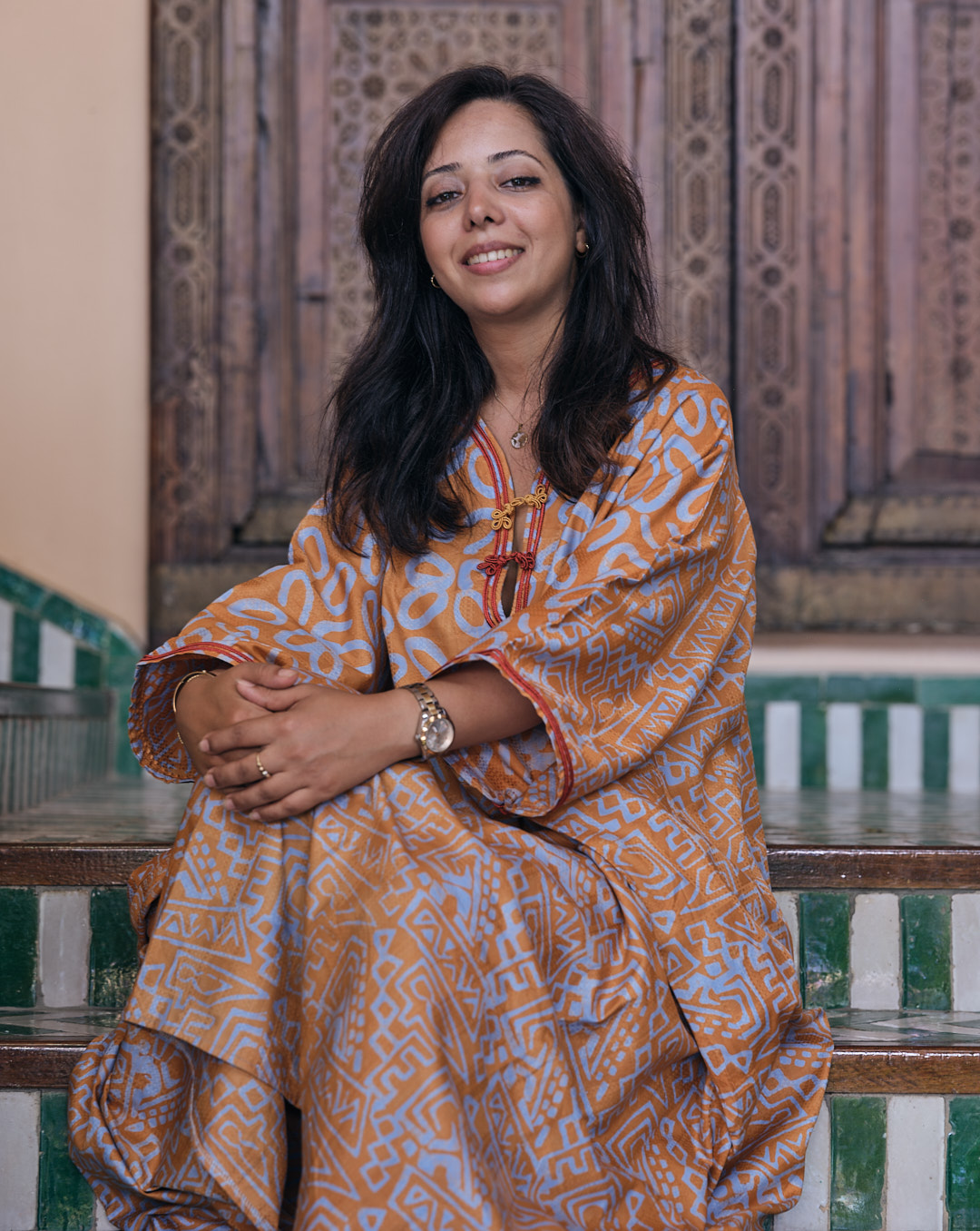
Born in Rabat and raised in Morocco, Saaid grew up in a culture where cloth is a language. In her family, as in many Moroccan families, a kaftan is not simply bought and worn. It is made, adjusted, admired, and remade, passed between the hands of women who know how to turn fabric into an occasion. She grew up understanding that what you wear can carry your history in its seams, though she did not know then that she would one day spend her life listening to that idea.
Her career in sustainability, mostly around water, carried her across the continent. An Australian firm she worked with in Rabat asked whether she would move to West Africa. She said yes. That single yes became almost ten years in Ghana and a decade of travelling for projects through Nigeria, Sierra Leone, Burkina Faso, and beyond. Everywhere she went, she looked at the land and at the fabric. Her training had taught her to ask what a project gives to a community and what it takes away, and she found she could not switch that question off in a market stall any more than on a job site. She saw textiles made entirely by hand, dyed in patterns that held generations of knowledge, and wondered why so few of them ever travelled beyond the borders of the country that made them.
The Turning Point in Nigeria
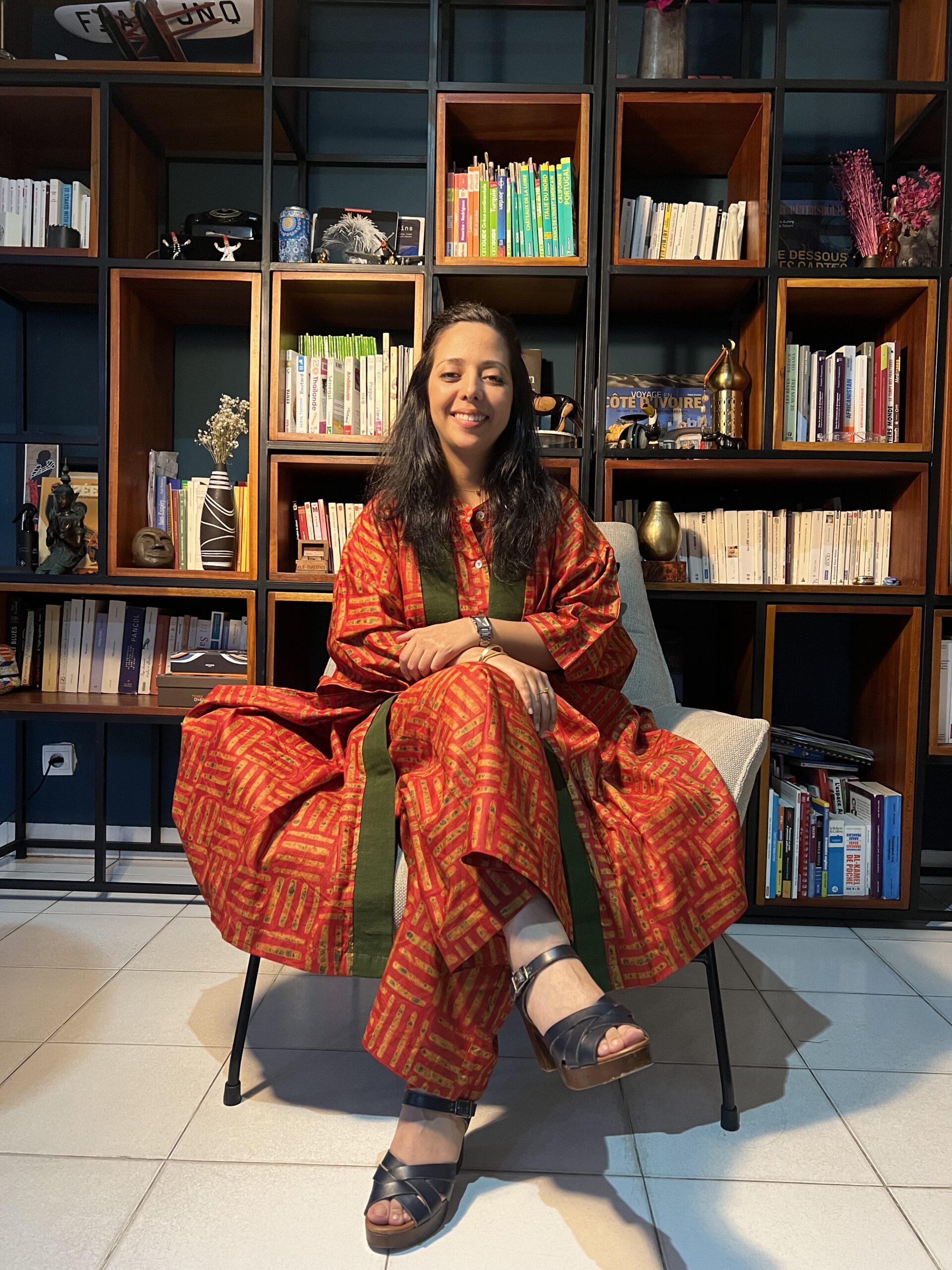
The turning point, what the French call the déclic, happened in Nigeria in 2022. Saaid found a fabric so beautiful she could not leave it behind. She brought it home and made a few pieces, first for herself, then for her mother and sisters. She was not thinking about a business. She was thinking about how the cloth felt and how it seemed to belong to both of the places she called home. But people kept asking where the pieces came from. So she began, the way she begins everything, by studying it from the inside.
She did not wait to build a polished brand with a strategy already written. She made a small run of pieces and watched how people responded to them, in Ghana and in Morocco, at events where she was often the only one dressed the way she was dressed. What she saw was recognition. Women from West Africa, from Morocco, from Europe, from Asia, from America, all seemed to find something of themselves in the same garment.
Hybrid Design: Where Two Homelands Meet
The idea is what Saaid calls hybrid design. Her work lives in the space where the geometry of Moroccan zellige, those interlocking tiles she grew up surrounded by, meets the colour and rhythm of West African Kente and hand-dyed batik. On one garment, two homelands share a single canvas and, somehow, agree. She did not invent either tradition. She only refused to choose between them, because she has never been asked to choose between them in her own life.
The Meaning Behind the Name Burdah
She named the brand Burdah. In Arabic, a burdah is a cloak or a mantle, and it is also the name of one of the most beloved poems in the Muslim world, a poem about a cloak given as an act of grace and healing. The word felt right to her. A cloak is the most human of garments. It wraps you, it protects you, it travels with you. For someone who left one home and built another, a cloak is not a metaphor she had to reach for. It is simply what she needed.
Slow Fashion, Handmade in Small Runs
Because Saaid comes from the environmental world, she could not build this brand any other way than carefully. Everything is made by hand, in small runs, often only one or two pieces in a given colour. No factory, no mass production, no warehouse of unsold stock. She works directly with artisans and tailors in Ghana and in Morocco, and she keeps the whole chain, from choosing the fabric and the dye to the final stitch, on this continent, by choice. She knows it would be cheaper to make these clothes somewhere else, in greater quantity. That has never been the point. Even the offcuts stay with her, waiting to become something else, because waste was the first thing her old career taught her to see.
Two Careers, One Purpose
People sometimes ask whether it is strange to move from environmental consulting to fashion. To Saaid, they are the same work in different clothing. Both are about what we leave behind. Both honour the hands and the places that make a thing possible. When a woman puts on one of her pieces, and she gets to tell her where the fabric was dyed and who finished the hem, she watches something shift in her. She is not just wearing a dress. She is carrying a small, traceable piece of a long human story, and she becomes part of it.
Saaid still travels between Rabat and Accra, between the country that raised her and the one that took her in. For a long time she thought she would have to belong to one or the other. Burdah is her answer to that. It is a cloak wide enough for two homes. And every time someone new puts it on, in a city she has never been to, she is reminded that culture was never meant to have borders. It was meant to be worn.
Comments are closed.