I Survived a Car Crash at 5, But Nigeria Made Life Harder For Me
Olamide Francis was five years old when a commercial vehicle, known locally as a Danfo, knocked him down at Oke Ayo bus stop in Lagos, Nigeria. The accident set off a chain of events that would lead to an amputation at nine and a lifetime of navigating a system that, he says, was never designed with people like him in mind. Now a writer, author, and former Nigerian journalist working in media and communications in the UK, Olamide is sharing his story and working behind the scenes to help others living with disabilities.
The Accident That Changed Everything
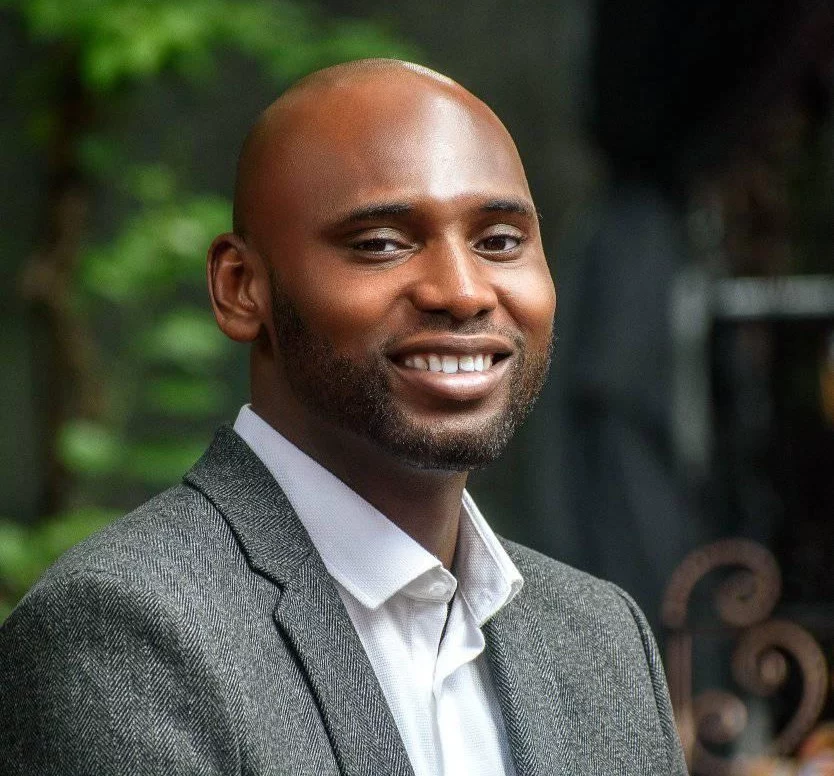
It was a Sunday afternoon when Olamide, left in the care of a neighbour, tried to follow the neighbour’s children to fetch water across a busy road. They tricked him into going back inside for his slippers, then crossed without him. He chased after them. He made it past the first lane of traffic heading towards Iju-Ishaga, but as he tried to cross the return lane, a Danfo hit him. His leg was trapped underneath the vehicle.
Good Samaritans pulled him out and rushed him to two nearby hospitals, both of which turned him away, fearing he might die in their care. By the time he reached a third hospital, he was drifting in and out of consciousness. His parents were there when he opened his eyes. The hospital gave first aid but said he needed a general hospital urgently.
At the general hospital, his leg was put in a Plaster of Paris (POP), but there was no real medical intervention. A matron going on leave warned his parents that his condition was worsening and he might not survive if he didn’t get better care. A young doctor who had befriended him told his parents he needed a blood transfusion and likely wouldn’t survive another day without it. He advised them to move him if they could.
The Road to Amputation
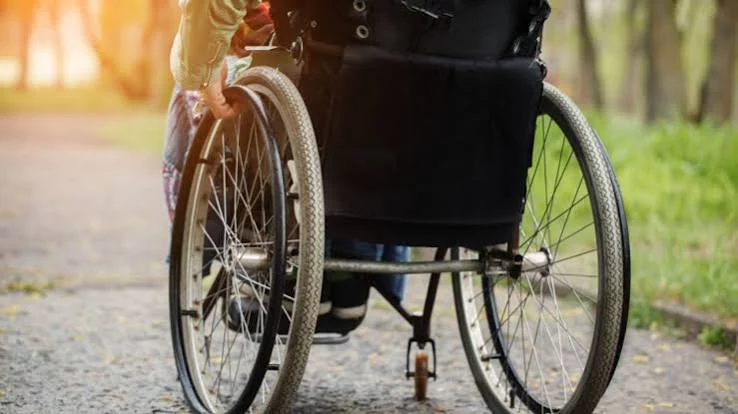
His parents rushed him to the National Orthopaedic Hospital in Igbobi, Yaba, Lagos. When doctors cut off the POP, the stench filled the room. His leg had rotted so badly it no longer looked like a leg. Four of his toes were gone; only the big toe remained. At Igbobi, they performed a skin graft to cover the rotten leg and tried to see if he could walk on it. It was impossible. He spent months in the hospital before he could even put the leg on the ground, and even then, the pain was unbearable.
Eventually, he was told the permanent solution was amputation. He needed to decide quickly, or he might lose the chance of a below-the-knee amputation. His parents couldn’t bring themselves to agree. He was discharged and returned to school with a walking stick, wounds that never fully healed, and painkillers. It took almost four years for his parents to decide. When they finally saw that the pain was unbearable for all of them, they agreed. He was nine years old. They returned to the hospital in time for a below-the-knee amputation.
Escaping Self-Pity

Becoming an amputee at nine shattered Olamide’s confidence. He became terrified of socialising. Children can be casually cruel, and every day in school, his disability became the go-to insult. If someone couldn’t win an argument with him, they brought up his leg. He hid his prosthetic limb and crutches, but classmates would sometimes deliberately pull at his trousers to expose the prosthetic and laugh. As he grew older, he began to care less and developed a thick skin.
Something switched in him. He discovered the power of knowledge. He started reading everything he could find, feeling that his mind was in a prison and knowledge was his way out. He read about a US president who used a wheelchair and still led the country. He decided that if he knew as much as anyone who wasn’t disabled, his life would be easier and better. Knowledge became his escape.
He wrote about these experiences in his memoir, Orchestrated: Living Against The Odds. People ask why he waited so long to tell his story. He says he had become so comfortable in his own skin that he forgot his story could mean something to someone else. He had built a life around applied knowledge and stopped thinking of himself as a person living with a disability. What he hated most was being treated differently. People saw his disability and assumed he was useless. So he never asked for special treatment. At school, if the teacher made late-comers kneel, he knelt. If the teacher flogged them, he took the same strokes. He wanted as much independence as he could get.
In his book, he advises that before rushing to help a person living with a disability, ask them first if they need any help. Sometimes, they don’t see your gesture as help. He just wanted to be treated as equally as possible.
Surviving an Inaccessible Country
Mobility is crucial for an amputee, especially a child amputee. For most people, a prosthetic limb makes it better. But in Nigeria, a prosthetic limb isn’t something you are given after amputation. At the government hospital, they hand you an invoice before measuring your stump. It’s cash and carry. Olamide’s first prosthetic, around 2005, cost over ₦100,000. When he went back for an adjustment a few years later, he was still paying almost ₦100,000. The last time he priced one in a Nigerian hospital, it was over ₦250,000. He can’t imagine what the price will be today.
Just last year, he helped someone get a simple polio calliper at a government hospital. They spent over ₦200,000, and it still wasn’t designed properly. He doesn’t think the person could use it. Many people who want a prosthetic limb can’t afford it, so they just get crutches and get on with their lives. When Olamide walks the streets of Lagos and sees people with limb loss who could have been more mobile with a prosthetic, he tells himself the difference between them and him is technically just a prosthetic limb. Some street beggars resorted to begging because a lack of mobility aids left them with no choice.
Even if you get a prosthetic limb, Medicare care should not stop there, but it unfortunately does for regular Nigerians. What about rehabilitation? From his experience, there was no rehabilitation structure, no weeks of sessions on how to walk with a prosthetic limb or care for it. There’s also no one thinking about your mental health or that of your family. At best, they put you in front of a mirror after fitting; you walk up and down and get sent home to figure the rest yourself. Olamide even learned to repair parts of his prosthetic limb himself when minor repair costs were unaffordable. In his book, he wrote that nobody should rush an amputee into a prosthesis because they have to be mentally ready first. Nobody in Nigeria was thinking about that. The health care system and people want you to just snap out of it after losing a part of yourself. He is currently working to fix this gap in care and support, especially for child amputees.
A World of Better Possibilities
Olamide only understood how much was missing when he moved to the UK. Here, a prosthetic limb is free and optional if you get it through the government. They measure your stump, you go home, and it gets delivered to your house. They even ask whether you would love to swim or run with it so they can design it accordingly. There is also a rehabilitation programme to help you in that phase. Public buildings have lowered counters for wheelchair users. Buses and trains have ramps. In London, disabled people ride public transport for free and have priority public parking spaces. It’s not perfect here, as there is still a lot to be done with policy implementation. But if Nigerians had even half of it, we would probably praise the government for decades to come.
Back home, you go to some banks, and there’s no ramp. Many public buildings have no ramps either. Some places are even designed with stairs only. The Nigerian High Commission Office in London has no provision for persons with disabilities, not from the entrance or through the stages of service delivery. It is because it’s not ingrained in our national consciousness. Nigeria has a law against discrimination against persons with disabilities, but it only sits on paper. Olamide thinks the real problem is orientation. We don’t see people with disabilities as something we have to plan for at every level. Very few things are designed with them, with us, in mind. A law means nothing if there are no consequences. If you build a bank or a school without a ramp, you should be forced to tear down that section and rebuild it, no matter the cost. We should also look at the national budget. If allocations are not going in that direction, then it’s not a government priority. Charities and NGOs can only do their best. Only the government, directly or indirectly through an enabling environment, can change lives at scale.
Defying Limits
The system can surely be better, but Olamide has never let it limit him. He worked as a journalist, covering crime, protests, and conflict, and many people never knew he had a disability. He has worked at reputable national newspapers and media organisations and thrived. People told him he could never drive, and he is now a certified driver on the right (Nigeria) and left (UK) sides of the road. Everything people doubted he could do, he has done. And many more to tick off his bucket list.
If he could speak to a nine-year-old version of himself, he would tell him he will thrive and not let his physical condition place a stamp on him. It is just one chapter from his life’s voluminous book, and he shouldn’t let the current page decide the next chapters. And if he is in Nigeria, he would tell him not to let the system decide how far he goes.
Comments are closed.